In This Guide
7 Hot Wheels Repack Warning Signs Every Collector Should Know
Introduction
For many collectors, the excitement of Hot Wheels collecting comes from the hunt. Whether it’s finding a Super Treasure Hunt on the pegs, discovering an older vintage release at a swap meet, or scoring a rare casting online, collectors are always searching for the next great addition to their collection. Unfortunately, as the hobby has grown, so have the number of fake, altered, and repacked Hot Wheels being sold online, at flea markets, collector shows, and even local marketplace listings.
Most collectors in the Hot Wheels community are honest people who genuinely love the hobby. However, some sellers attempt to increase the value of common cars by swapping wheels, resealing packaging, replacing vehicles inside blisters, or even creating fake Treasure Hunts. Learning the most common Hot Wheels repack warning signs can help collectors avoid expensive mistakes and protect their collections from altered or fake cars.
In this guide, we’ll break down seven Hot Wheels repack warning signs every collector should know before making a purchase.
What Does “Repacked” Mean?
A repacked Hot Wheels car usually refers to a package that has been opened, modified, and resealed to appear factory original again. In some cases, a rare car is removed and replaced with a common casting. Other times, sellers modify wheels, swap parts, or attempt to create fake error cars that appear valuable to newer collectors.
Some common examples include:
- Removing a Super Treasure Hunt and replacing it with a standard version
- Swapping premium Real Riders wheels onto a basic mainline
- Resealing older packaging to increase value
- Creating fake error variations
- Using glue or heat to close packaging back up
To inexperienced collectors, these packages may still appear new at first glance. However, careful inspection usually reveals several warning signs.
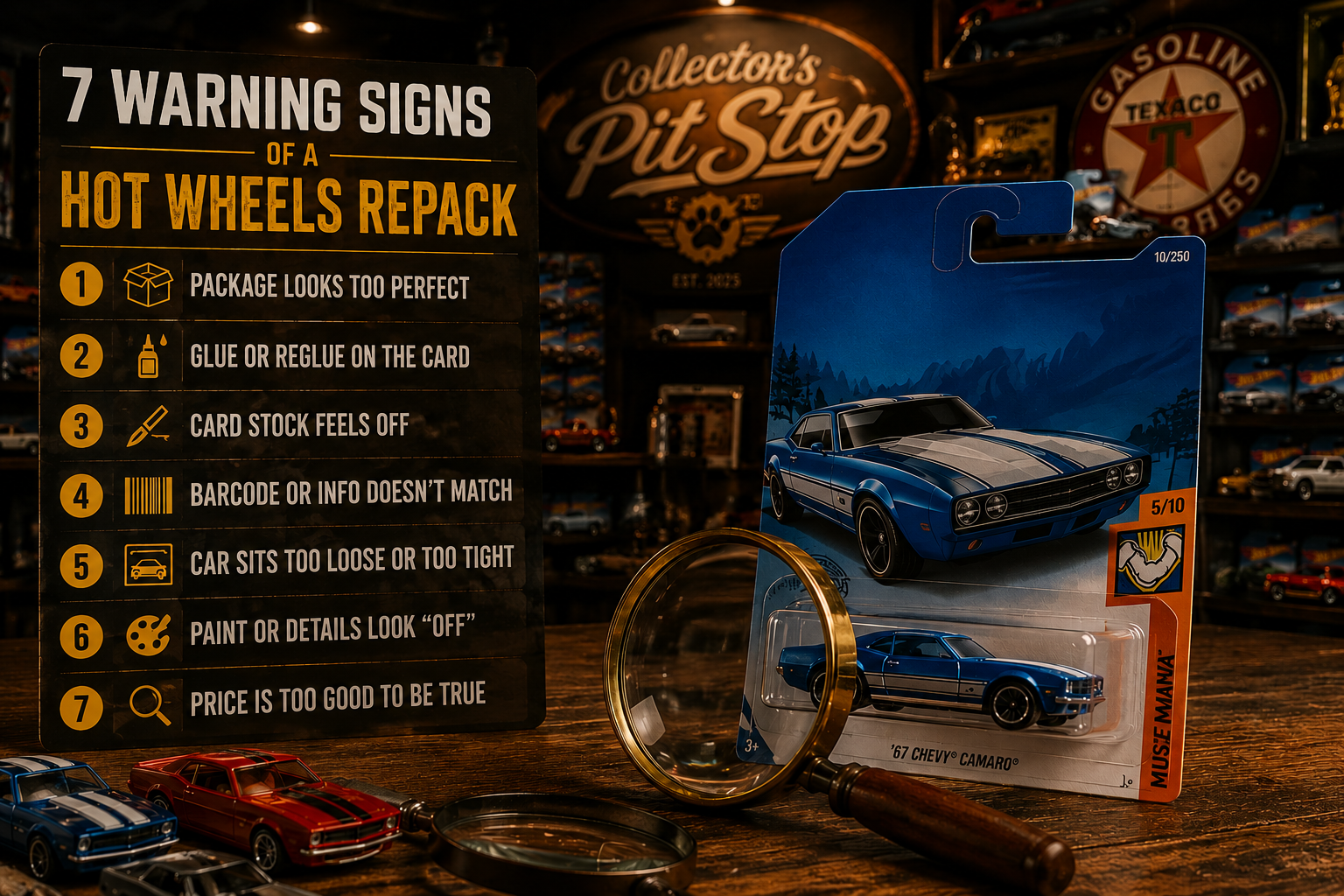
1. Hot Wheels Repack Warning Signs: Uneven or Excessive Glue
One of the biggest Hot Wheels repack warning signs is unusual glue around the blister packaging.
Factory Hot Wheels packaging is sealed using consistent manufacturing equipment that produces smooth and even edges. Repacked cars often show glue inconsistencies that become obvious under good lighting.
Collectors should look for:
- Thick glue buildup
- Cloudy glue marks
- Uneven sealing
- Glue strings
- Excessive shine around edges
- Small air bubbles near the blister
Many scammers use super glue or hot glue after opening the package to swap the car inside. Under close inspection, these repairs usually become easier to spot.
Experienced collectors usually learn to recognize Hot Wheels repack warning signs quickly by carefully inspecting glue patterns, wheel fitment, and packaging details.
2. Packaging Damage Around the Blister
Another major Hot Wheels repack warning sign is damage around the blister itself.
Opening a Hot Wheels package without leaving evidence is more difficult than many people realize. Even careful resealing attempts often leave small clues behind.
Watch for:
- Lifted corners
- Wrinkled cardboard
- Warped plastic
- Tiny cuts near the blister
- Heat discoloration
- Soft spots in the card
- Uneven plastic texture
Some sellers use heat guns or blades to remove the blister before resealing it. Vintage Hot Wheels cards deserve even more attention because older packaging naturally becomes more fragile over time.
Many newer collectors miss these Hot Wheels repack warning signs because resealed packaging can sometimes appear factory sealed at first glance.
3. The Car Does Not Match the Package
Sometimes the easiest clue is simply that the car inside does not belong in the package.
Collectors should always compare suspicious cars with official release photos whenever possible. A surprising number of fake or altered Hot Wheels contain obvious mismatches once you know what to look for.
Common mismatches include:
- Incorrect wheel styles
- Wrong paint colors
- Missing tampos
- Different interior colors
- Incorrect casting variations
- Wrong series placement
For example, a package labeled as part of a racing series may contain a version of the casting that was never officially released in that lineup.
Collectors often compare release details using official resources from Mattel Hot Wheels.
4. Suspicious Wheel Swaps
Wheel swaps have become extremely popular in the customizing community, and many collectors genuinely enjoy building custom Hot Wheels. However, some dishonest sellers attempt to pass modified cars off as factory originals.
Premium Real Riders wheels can dramatically increase a car’s appearance and perceived value. Some scammers install upgraded wheels onto common mainline castings and attempt to sell them as rare releases.
Signs of suspicious wheel swaps include:
- Axles sitting unevenly
- Wheels rubbing against fenders
- Different wheel styles front and rear
- Scratches near axle points
- Glue residue underneath the chassis
- Loose wheel fitment
Factory Hot Wheels generally have consistent wheel alignment and clean axle installation. Modified cars often leave small imperfections behind once carefully inspected.
Not every customized Hot Wheels car is dishonest. Many customizers proudly disclose their modifications. Problems begin when sellers intentionally hide modifications to increase value.
5. Prices That Seem Too Good to Be True
If a rare Hot Wheels car appears dramatically cheaper than market value, collectors should slow down and investigate carefully.
While good deals do happen occasionally, scammers often use low prices to create urgency and pressure buyers into quick decisions.
Collectors should be cautious when:
- Rare Treasure Hunts are priced suspiciously low
- Sellers refuse additional photos
- Listings use blurry images
- Descriptions remain vague
- Sellers avoid answering questions
- Multiple “rare” cars appear from the same seller
Online marketplaces can be excellent places to find collectibles, but buyers should always review seller ratings, detailed photos, and feedback history before purchasing expensive items.
Many collectors also research current listings through eBay Hot Wheels Marketplace before making expensive purchases.
6. Lack of Detailed Seller Photos
Another important Hot Wheels repack warning sign is when sellers avoid providing detailed close-up images.
Legitimate collectors and reputable sellers usually understand why buyers request extra photos. Sellers who hesitate to provide clear pictures of the blister edges, wheel details, or packaging seams may be hiding tampering or damage.
Collectors should request close-up images of:
- Blister edges
- Package corners
- Wheel details
- Base markings
- Treasure Hunt symbols
- Package seams
Good photos help collectors compare suspicious listings with known authentic examples.
7. Fake Treasure Hunt Symbols and Errors
Treasure Hunts and Super Treasure Hunts are some of the most targeted products for scammers because of their popularity and higher collector value.
Some dishonest sellers attempt to:
- Add fake Treasure Hunt symbols
- Swap rare cars into common packaging
- Create fake error cars
- Alter paint details
- Replace wheels to mimic premium releases
Collectors should carefully research authentic Treasure Hunt details before purchasing expensive examples online.
Collector communities and hobby groups can be excellent resources for learning release variations, packaging details, and known scams.
New collectors may also enjoy reading more collector guides at Collectors’ Pit Stop.
Buying Tips to Avoid Repacked Hot Wheels
Fortunately, collectors can avoid many problems by following a few simple buying habits.
Buy From Reputable Sellers
Experienced sellers usually provide:
- Detailed descriptions
- High-quality photos
- Honest condition reports
- Strong customer feedback
- Established collector reputations
Most trusted sellers care deeply about the collecting hobby and want long-term repeat customers.
Compare Listings Carefully
Collectors should compare:
- Wheel styles
- Paint colors
- Packaging details
- Interior colors
- Release variations
Small details often expose fake or altered cars.
Learn From Collector Communities
The Hot Wheels community contains many experienced collectors who enjoy helping newer hobbyists learn.
Collector groups can help identify:
- Fake Treasure Hunts
- Packaging variations
- Wheel swaps
- Rare release differences
- Known scam methods
Collector communities like South Texas Diecast Collectors Club can also help newer collectors learn about release variations, wheel swaps, packaging differences, and common scams.
The more experience collectors gain, the easier it becomes to recognize Hot Wheels repack warning signs before making a purchase.
Are All Opened Packages Fake?
Absolutely not.
Many collectors intentionally open Hot Wheels to:
- Display loose cars
- Photograph collections
- Customize vehicles
- Build dioramas
- Perform wheel swaps
- Enjoy the cars outside the package
Loose collecting is extremely common within the hobby.
The key difference is honesty. Ethical sellers clearly disclose:
- Opened packaging
- Wheel swaps
- Custom modifications
- Repainted cars
- Resealed items
There is nothing wrong with customized Hot Wheels as long as buyers understand exactly what they are purchasing.
You can also explore more diecast inventory and collector finds at Collectors’ Pit Stop Hot Wheels Collection.
Final Thoughts
Hot Wheels collecting should always be fun, exciting, and rewarding. While fake or repacked cars do exist in the hobby, collectors who learn the warning signs can avoid most problems through patience, research, and careful inspection.
Understanding Hot Wheels repack warning signs becomes easier over time and can save collectors from expensive purchasing mistakes. The more experience collectors gain, the easier it becomes to identify suspicious glue patterns, mismatched cars, altered wheels, and resealed packaging.
Most importantly, remember that the vast majority of collectors and sellers are passionate hobbyists who genuinely love Hot Wheels. Staying informed, asking questions, and buying carefully will help you build a collection you can proudly enjoy for years to come.
Whether you collect Super Treasure Hunts, vintage Redlines, premium castings, or modern mainlines, knowledge remains one of the most valuable tools any collector can have.