🏁 Introduction: More Than Just Toy Cars
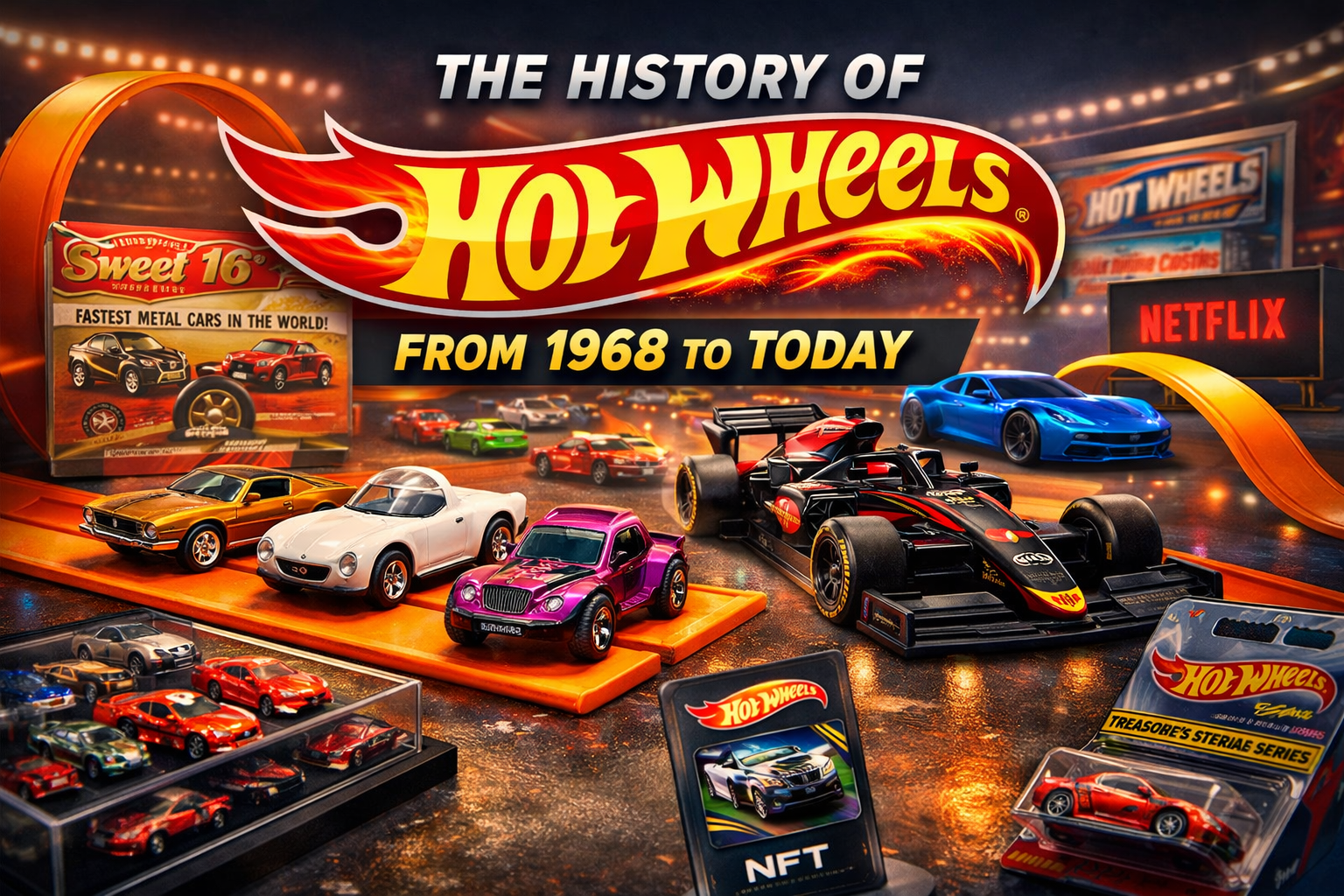
Hot Wheels history is more than just diecast cars—it’s a story of innovation, speed, and generations of collectors who grew up with these iconic vehicles.
Launched in 1968 by Mattel, Hot Wheels changed the toy industry forever. Instead of focusing on realism, they focused on speed, performance, and bold design—and collectors have been hooked ever since.
For many of us, Hot Wheels wasn’t just a toy. It was part of growing up.
I was born in 1973, right in the middle of the early Hot Wheels era. Some of my earliest memories come from when my family lived in Tijuana. Between the ages of one and five, I remember playing with Hot Wheels in the dirt, running them across old, abandoned cars, and even using an abandoned school bus as part of my “track.”
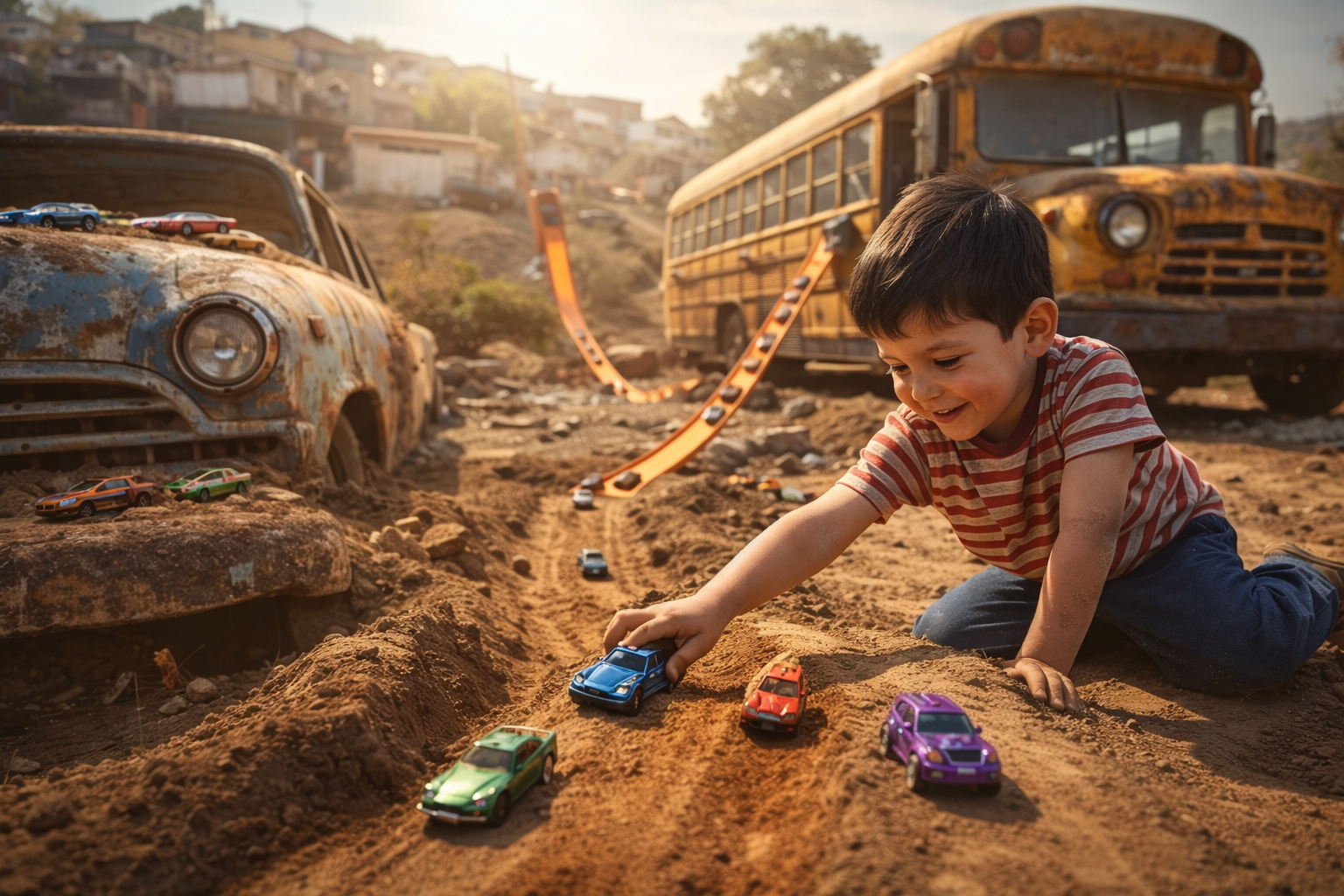
The Hot Wheels history connects deeply with childhood memories like playing in the dirt and creating imaginative worlds with diecast cars.
As I got older—around 7 to 10 years old—my imagination grew with my collection. I would set up full cities on the kitchen table, using racing tracks as highways. In the center, I had a parking lot and a small gas station toy, and I built roads around it like a real freeway system. I lined up my Hot Wheels cars as if they were stuck in traffic, creating an entire world out of diecast.
Fast forward to today, and I now own pieces from that original era—including cars from the legendary Sweet 16. That’s the power of Hot Wheels—it stays with you for life.
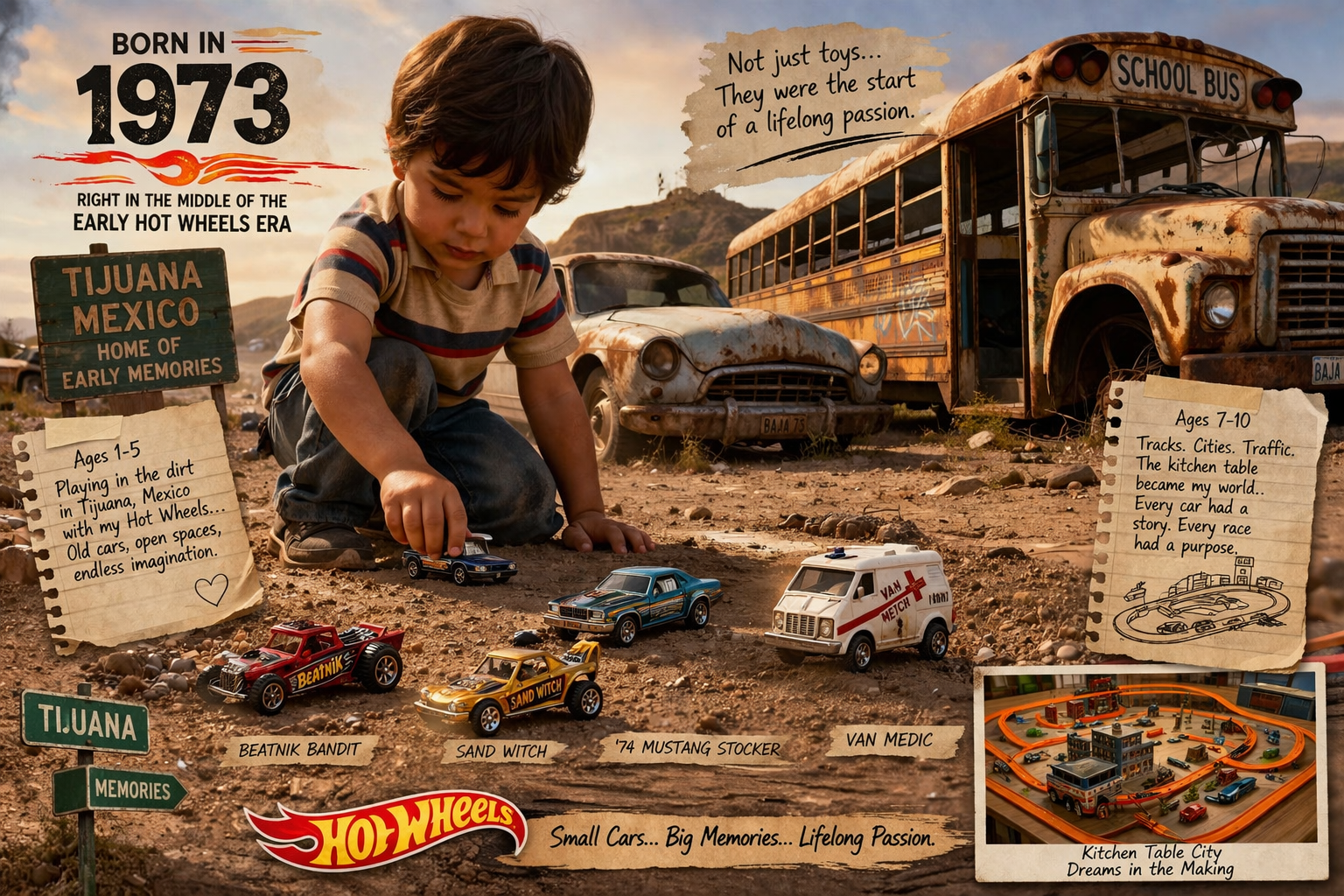
For many collectors, the Hot Wheels history begins with simple moments of play that turn into a lifelong passion.
🚗 The Beginning: The Sweet 16 (1968)
Hot Wheels officially launched in 1968 with the release of the original Sweet 16—a lineup of cars that would become legendary among collectors.
The very first Hot Wheels car ever released was the Custom Camaro. These early models featured:
- Spectraflame paint (bright, metallic finishes)
- Redline tires
- Low-friction axles for speed
Unlike other diecast brands at the time, Hot Wheels cars were designed to be fast. They weren’t just display pieces—they were built for racing.
Today, I’m proud to own a few pieces connected to that era, including the Beatnik Bandit and Sand Witch—cars that represent the creativity and bold styling that made Hot Wheels stand out from day one.
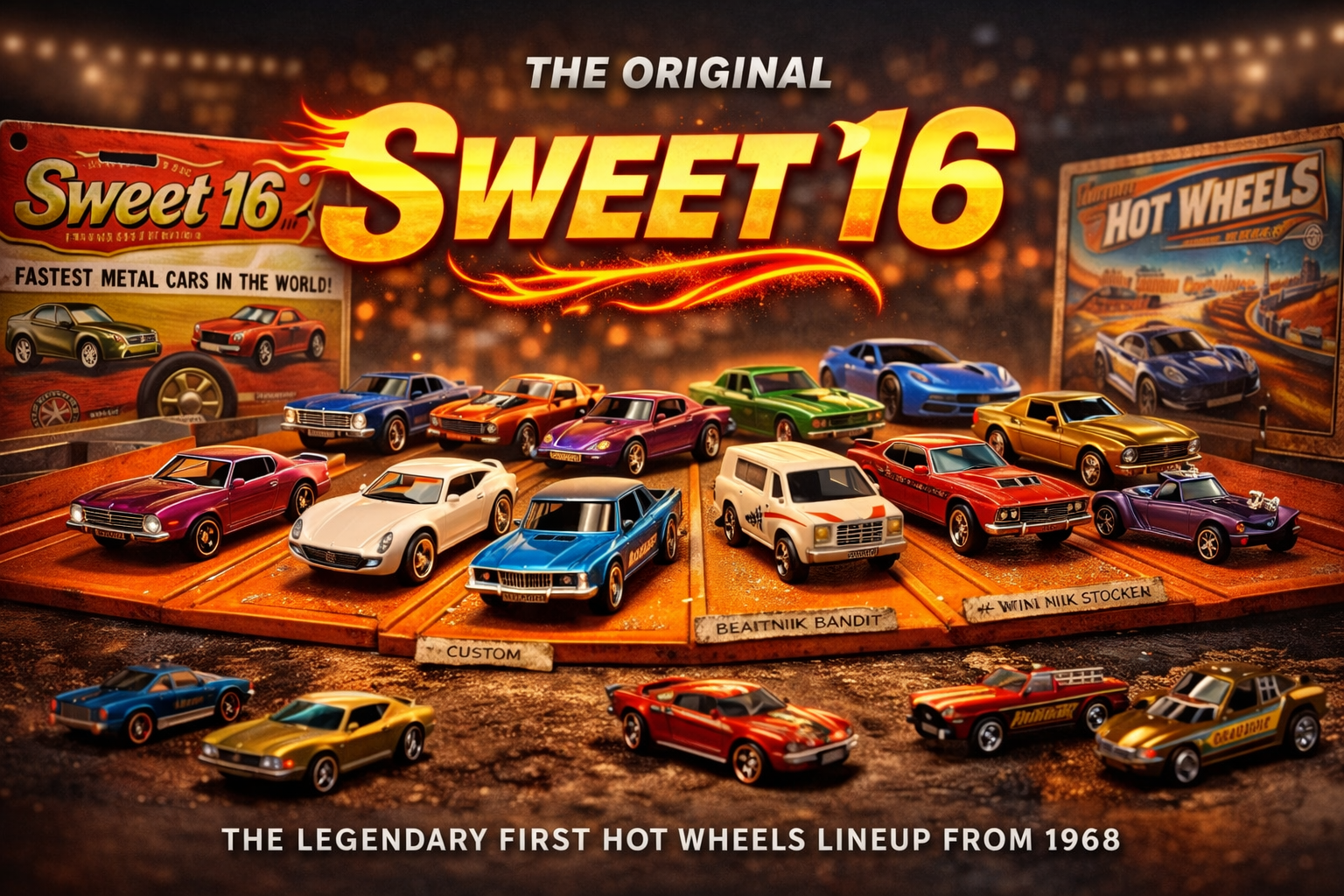
The Hot Wheels history officially begins in 1968 with the release of the original Sweet 16 lineup.
🔥 The Redline Era (1968–1977)
The Redline Era is considered the golden age of Hot Wheels collecting.
Cars from this period featured the signature red stripe on the tires, which is where the term “redline” comes from. These models were:
•Faster than competitors
•Built with innovative suspension
•Designed with bold, custom styling
For collectors today, redline cars are some of the most valuable and sought-after pieces in the hobby.
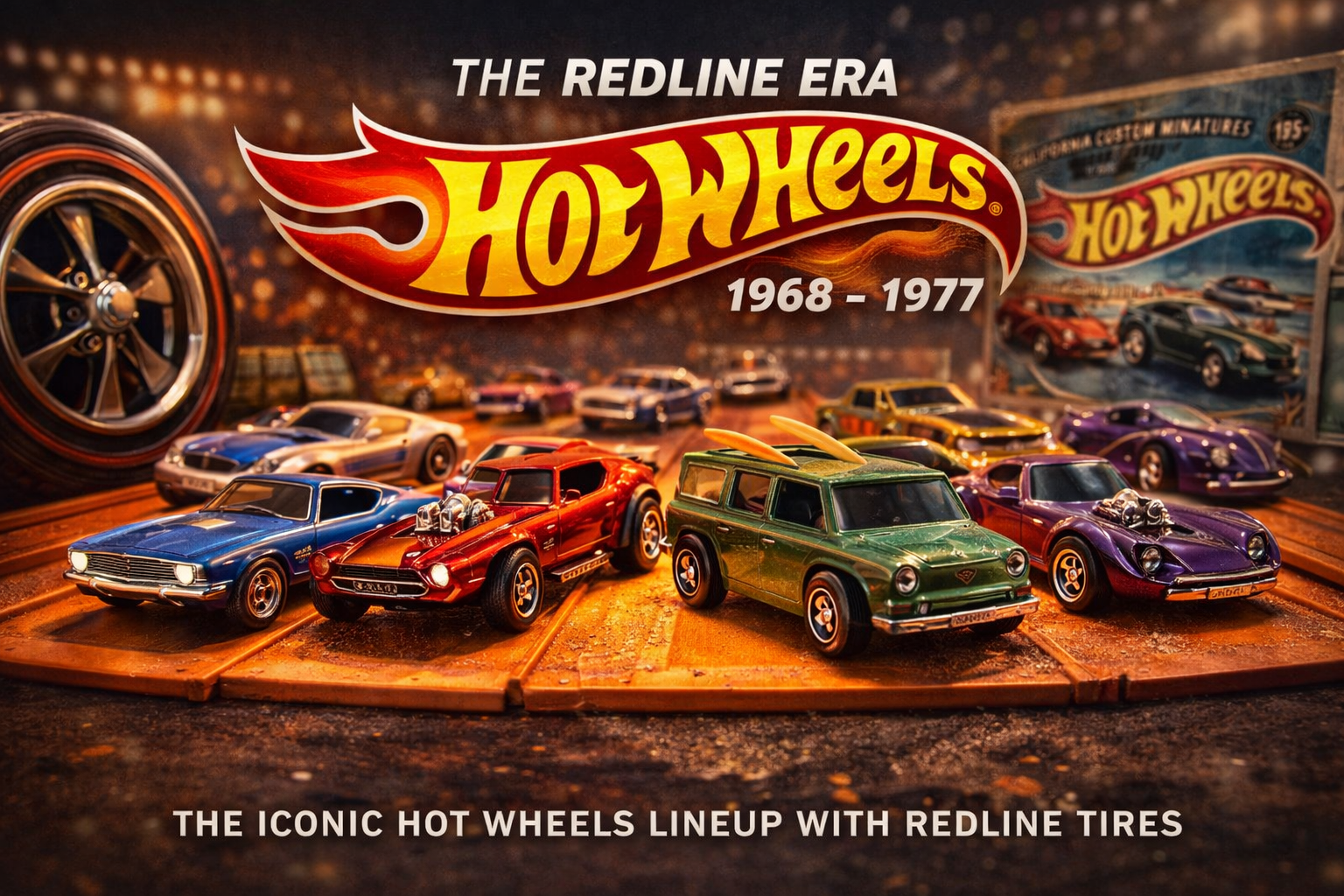
The Hot Wheels history includes the famous Redline era, one of the most collectible periods in diecast history.
📦 Expansion and Growth (1980s–1990s)
By the late 1980s and 1990s, Hot Wheels evolved into a global powerhouse.
Key milestones:
- 1989 – Collector numbers introduced
- 1995 – Treasure Hunts debut (a gamechanger for collectors)
- 1997 – Mattel acquires Matchbox
This era brought structure to collecting and helped build the community we see today.
Interestingly, this is also around the time I got back into collecting—between 1999 and 2004—when I started to see Hot Wheels not just as toys, but as collectibles with real value.
The Hot Wheels history expanded rapidly during the 1980s and 1990s, introducing new designs and collector-focused innovations.
💥 The Collector Boom (2000s–2010s)
As the 2000s rolled in, Hot Wheels began catering more to adult collectors.
New features included:
•Premium lines with higher detail
•Real Riders rubber tires
•Limited editions and special releases
Collectors became more serious, displays became more elaborate, and the hobby continued to grow.
The Hot Wheels history saw major growth during the collector boom of the 2000s and 2010s.
🚀 The Modern Era (2020–Today)
Today, Hot Wheels continues to dominate the diecast world.
Modern innovations include:
- Media expansions like Netflix shows
- Digital collectibles (NFTs)
- Collaborations with real-world brands and racing teams
Despite all the changes, the core idea remains the same: fun, speed, and creativity.
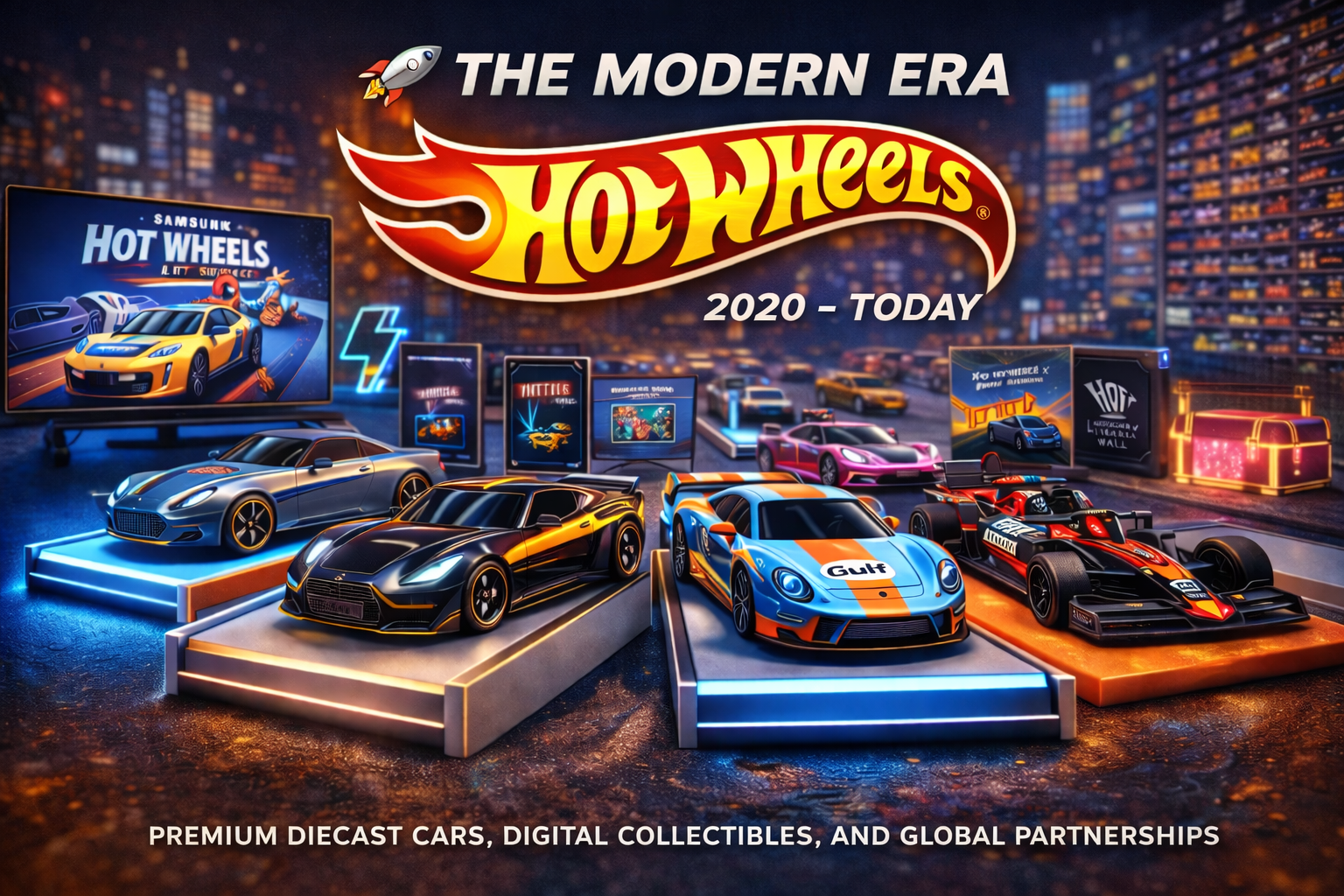
The Hot Wheels history continues in the modern era with premium releases, digital collectibles, and global collaborations.
🏆 Why Hot Wheels Still Matters
Hot Wheels has lasted over 50 years because it connects generations.
From kids playing in the dirt—like I did in Tijuana—to collectors carefully displaying rare finds, the brand continues to evolve while staying true to its roots.
What started as simple play turned into a lifelong passion for many of us.
That passion is part of what inspired me to build Collector’s Pit Stop—a place where collectors can find pieces that bring back memories and build new ones.
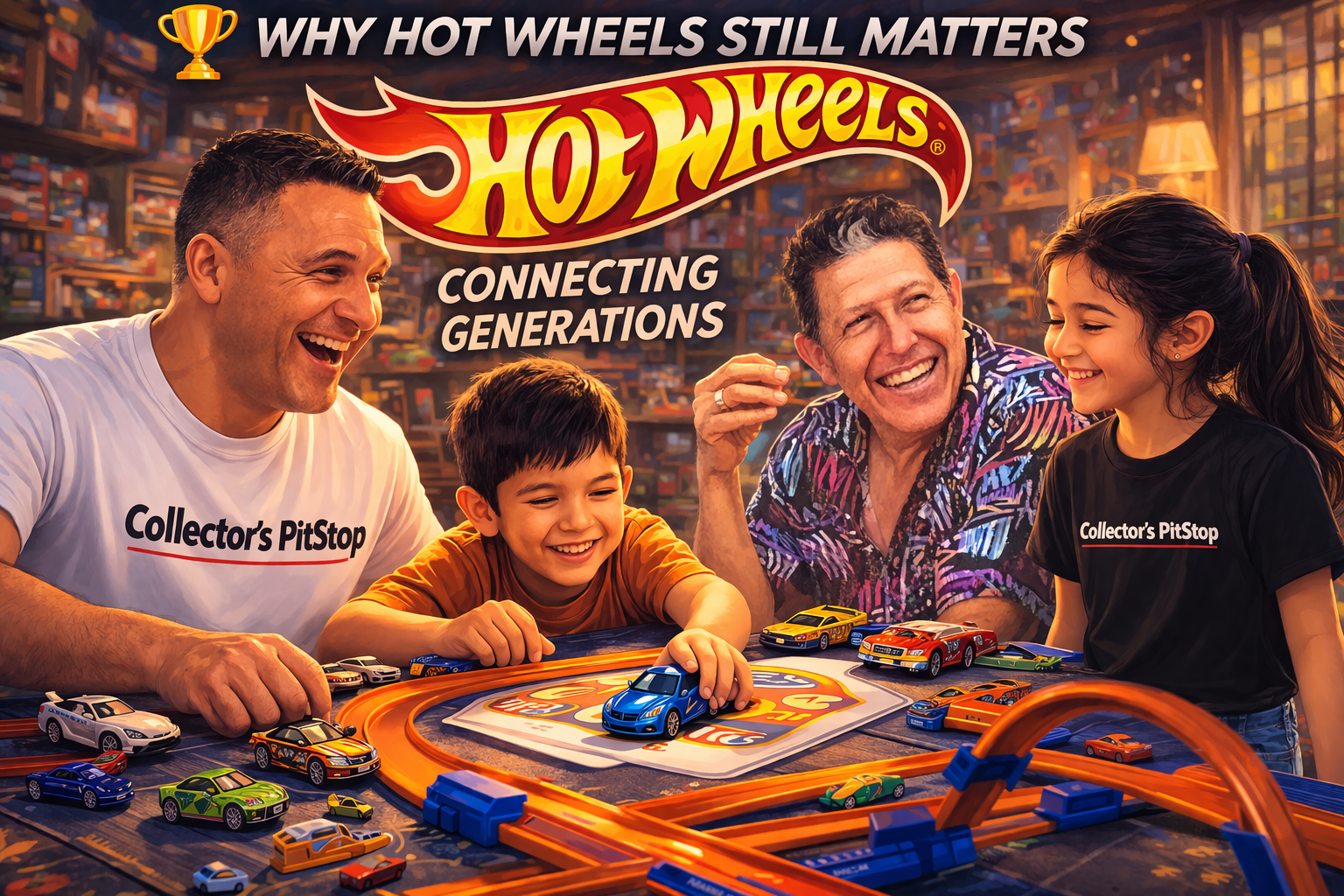
The Hot Wheels history continues to bring families together, connecting generations through shared passion and memories.
🔚 Final Thoughts
The history of Hot Wheels is still being written.
Whether you’re just starting or have been collecting for decades, every car tells a story.
And sometimes, that story starts with a small car in the dirt… and turns into something much bigger.