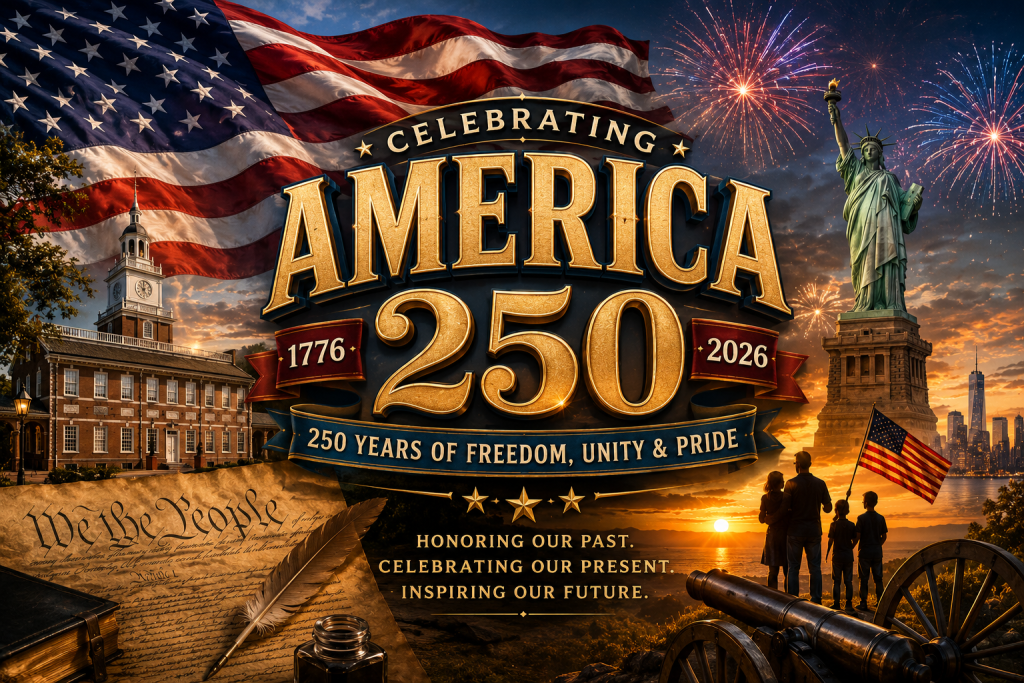
A patriotic artistic collage celebrating America’s 250th anniversary, featuring iconic symbols of freedom, history, unity, and the enduring spirit of the United States.
America 250 marks a once-in-a-generation milestone—the 250th anniversary of the signing of the Declaration of Independence on July 4, 1776. For two and a half centuries, the +United States has grown from thirteen determined colonies into one of the world’s most influential nations. This historic anniversary, known as the Semiquincentennial, is more than a birthday celebration; it is an opportunity to reflect on the people, events, and ideals that have shaped America’s journey.
The story of the United States is one of courage, sacrifice, innovation, perseverance, and an ongoing pursuit of liberty. It is a history filled with remarkable achievements, difficult challenges, and generations of Americans who have worked to build a stronger nation. From the Revolutionary War and the writing of the Constitution to scientific discoveries, technological innovation, and cultural achievements, every generation has contributed a new chapter to the American story.
For collectors, history enthusiasts, veterans, and families alike, America 250 is also a reminder of the importance of preserving our nation’s heritage. Historic documents, military memorabilia, vintage coins, stamps, patriotic artwork, and family heirlooms all help tell the story of where we’ve been and inspire future generations to learn about the past.
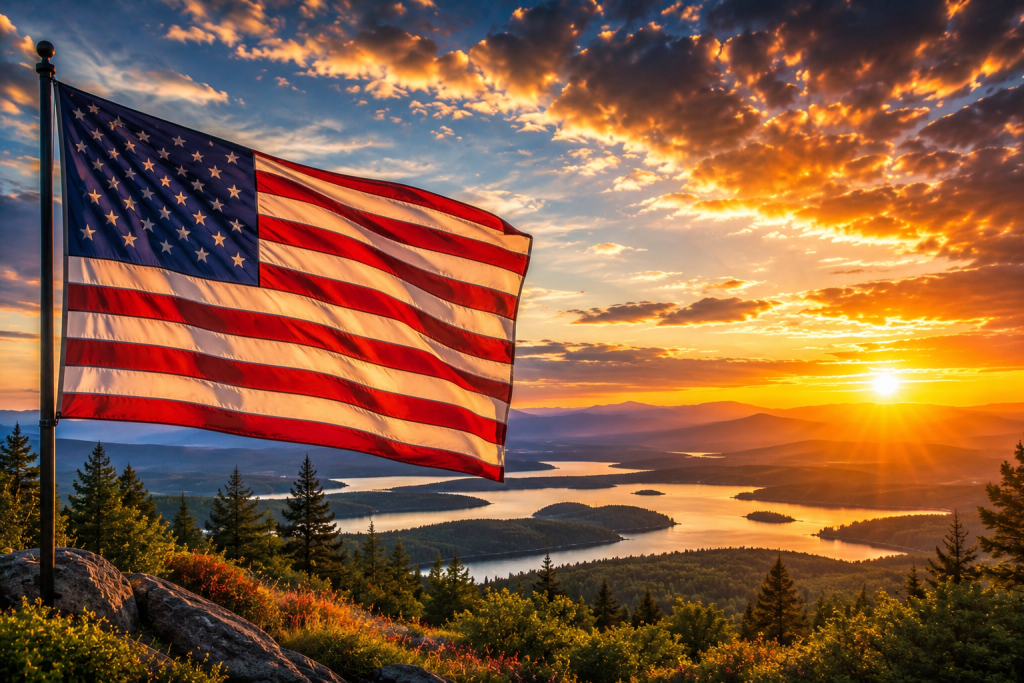
The American flag waves proudly over a breathtaking landscape, symbolizing 250 years of freedom, history, and the enduring spirit of the United States.
As Americans gather to celebrate this extraordinary anniversary, it is the perfect time to reflect on the nation’s beginnings, honor those who came before us, and look ahead with hope. Join us as we explore the remarkable journey of the United States over the past 250 years and celebrate the enduring spirit that continues to unite millions of Americans.
In This Guide
What Is America 250?
The year 2026 marks the 250th anniversary of the signing of the Declaration of Independence, making it one of the most significant milestones in American history. This celebration is officially known as the Semiquincentennial, a word that simply means a 250-year anniversary.
On July 4, 1776, representatives from the thirteen American colonies approved the Declaration of Independence, announcing their decision to separate from British rule. While the Revolutionary War had already begun, the Declaration clearly expressed the colonies’ belief that all people possess certain unalienable rights, including life, liberty, and the pursuit of happiness.
The document, primarily written by Thomas Jefferson with contributions from members of the Continental Congress, became one of the most influential political writings in history. Its principles have inspired democratic movements around the world and continue to shape American ideals nearly two and a half centuries later.
America 250 is not simply about celebrating a date on the calendar. It is about recognizing the resilience of a nation that has continually evolved while striving to uphold the values expressed in its founding documents. Communities across the country are commemorating this anniversary through educational programs, museum exhibits, historical reenactments, concerts, parades, and fireworks, giving Americans an opportunity to connect with their shared history.
For many families, the celebration is also a chance to pass stories, traditions, and values from one generation to the next, ensuring that the nation’s history remains alive for years to come.
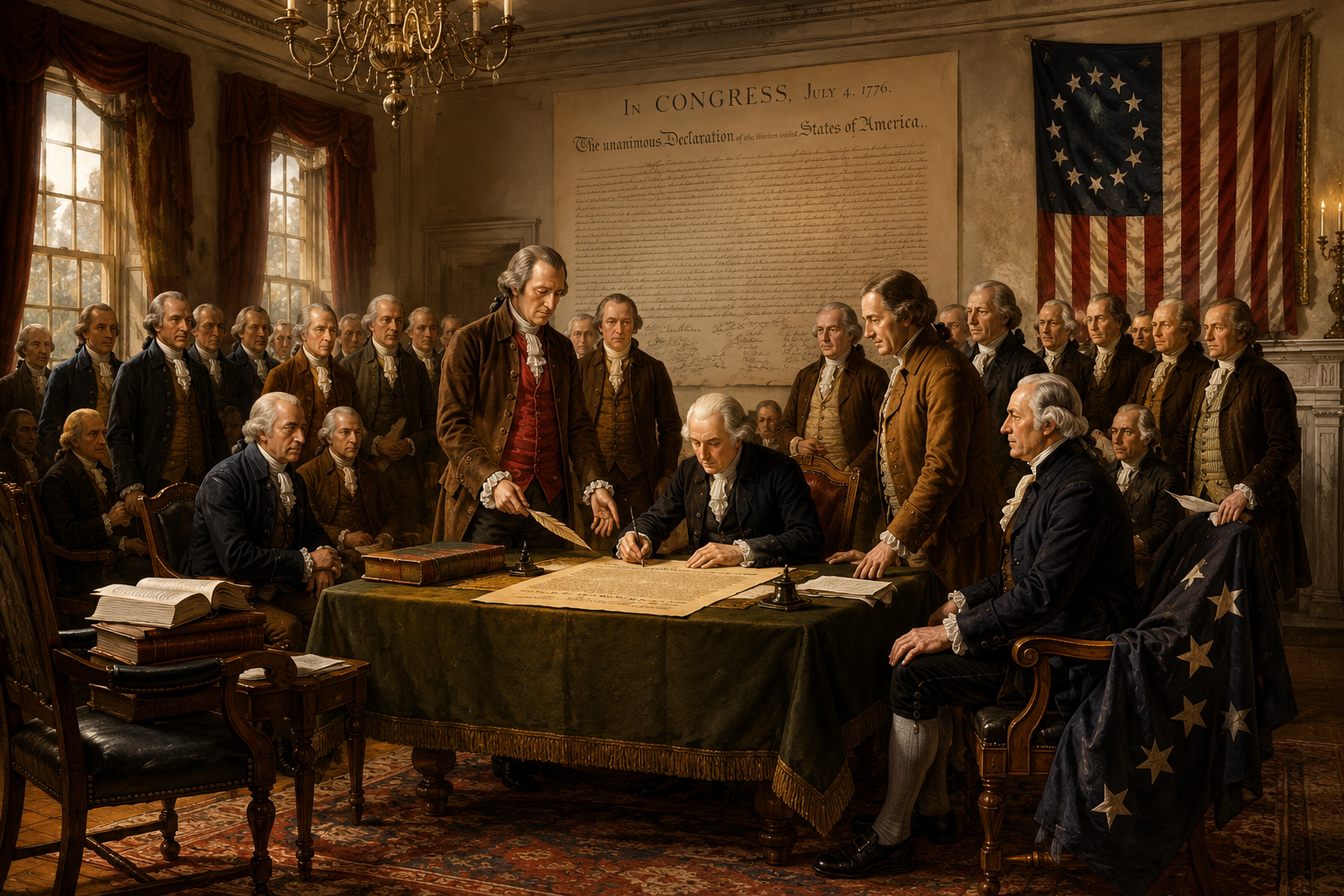
An artistic interpretation of the Continental Congress during the signing of the Declaration of Independence, marking the birth of the United States on July 4, 1776.
America 250: The Road to Independence
Long before the United States became an independent nation, the eastern coast of North America was home to thirteen British colonies. These colonies grew rapidly during the 1700s, developing thriving communities, farms, ports, and businesses. Although the colonists considered themselves loyal British subjects, tensions with Great Britain gradually increased.
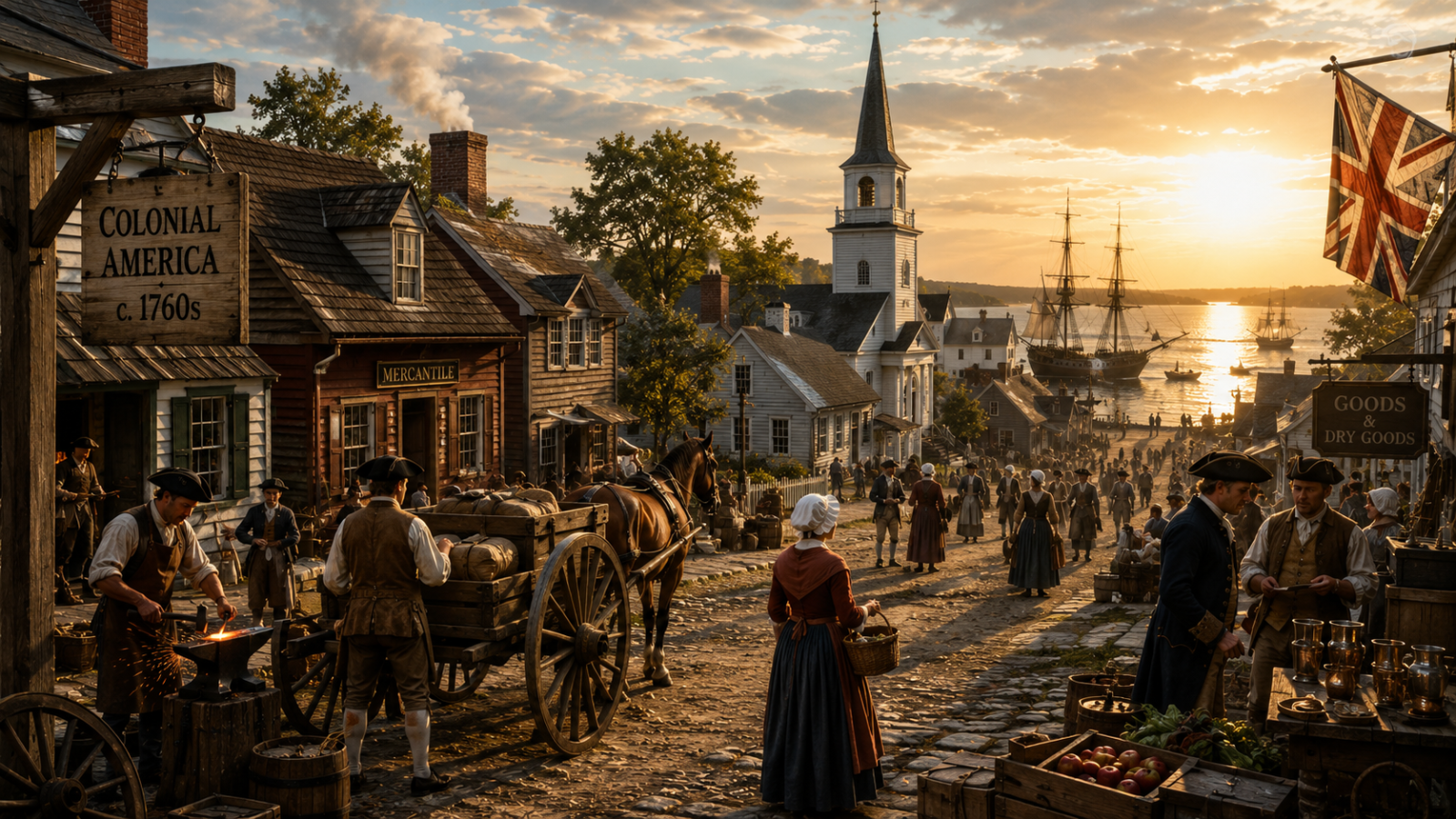
An artistic interpretation of everyday life in Colonial America during the 1760s, illustrating the communities, commerce, and traditions that existed before the American Revolution.
Following the French and Indian War, the British government sought to recover its financial losses by imposing new taxes on the colonies. Measures such as the Stamp Act and the Townshend Acts sparked widespread frustration because the colonists believed they were being taxed without representation in Parliament.
As dissatisfaction grew, organized protests became more common. One of the most famous events occurred in 1773 when colonists, disguised as Native Americans, boarded British ships in Boston Harbor and dumped hundreds of chests of tea into the water. The Boston Tea Party became a powerful symbol of resistance against British rule.
In response, Britain imposed harsh measures intended to restore order. Instead, these actions united many of the colonies and strengthened the movement toward independence. Representatives gathered at the First and Second Continental Congresses to discuss their future and organize resistance.
By the summer of 1776, many colonial leaders believed that independence was the only path forward. On July 4, the Continental Congress formally adopted the Declaration of Independence, forever changing the course of history.
This bold decision required tremendous courage. The men who signed the Declaration understood that failure could cost them their lives, yet they chose to pursue the ideals of liberty, self-government, and individual rights. Their determination laid the foundation for the United States of America
America 250 and the Founding Fathers
The birth of the United States was not the work of one individual. It was the result of countless patriots who believed that future generations deserved the opportunity to govern themselves. Among them were a remarkable group of leaders who became known as the Founding Fathers.
Perhaps the most recognized is George Washington, whose leadership during the Revolutionary War inspired the Continental Army through some of its most difficult moments. After the war, Washington became the nation’s first President, setting important precedents that continue to influence the office today.
Thomas Jefferson, the principal author of the Declaration of Independence, helped express the ideals that defined the young nation. His words about liberty and equality have echoed throughout history and remain among the most quoted passages in American literature.
Benjamin Franklin was more than an inventor and scientist. He was a diplomat whose efforts in securing French support proved critical to America’s success during the Revolutionary War. His wisdom, diplomacy, and practical approach helped strengthen the nation’s international standing.
John Adams became one of independence’s strongest advocates, tirelessly encouraging Congress to support separation from Great Britain. He later served as the second President of the United States and played a vital role in establishing the country’s early government.
James Madison, often called the “Father of the Constitution,” helped design the framework of the federal government and was instrumental in drafting the Bill of Rights, ensuring important protections for individual freedoms.
While these men are among the most well-known, thousands of soldiers, farmers, merchants, artisans, women, and community leaders also contributed to the nation’s founding. Their combined sacrifices remind us that history is shaped by both famous leaders and ordinary citizens working toward extraordinary goals.
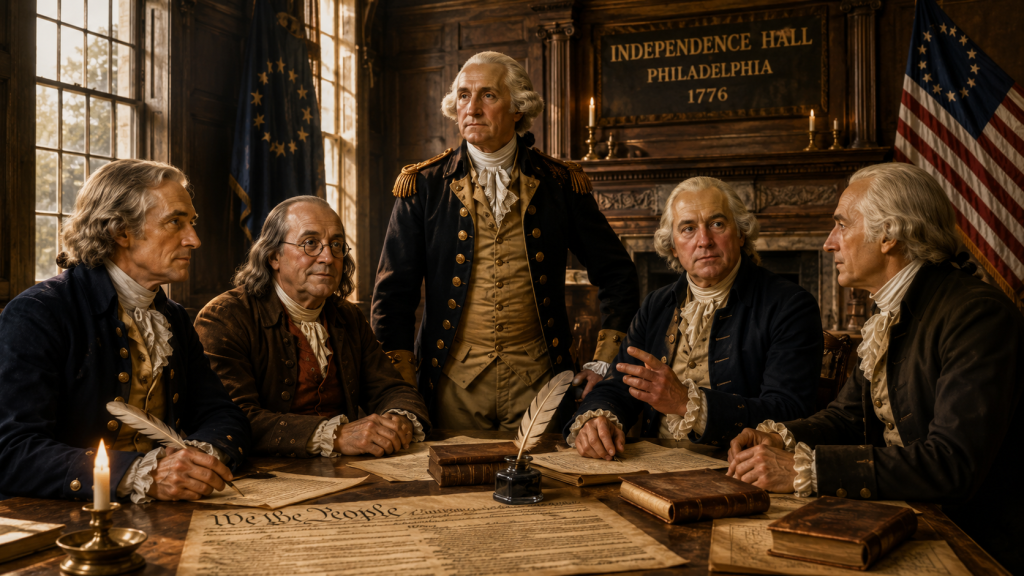
An artistic interpretation of several Founding Fathers meeting in Philadelphia during 1776 as they debated the principles that would shape the future of the United States.
The Revolutionary War and the Fight for Freedom
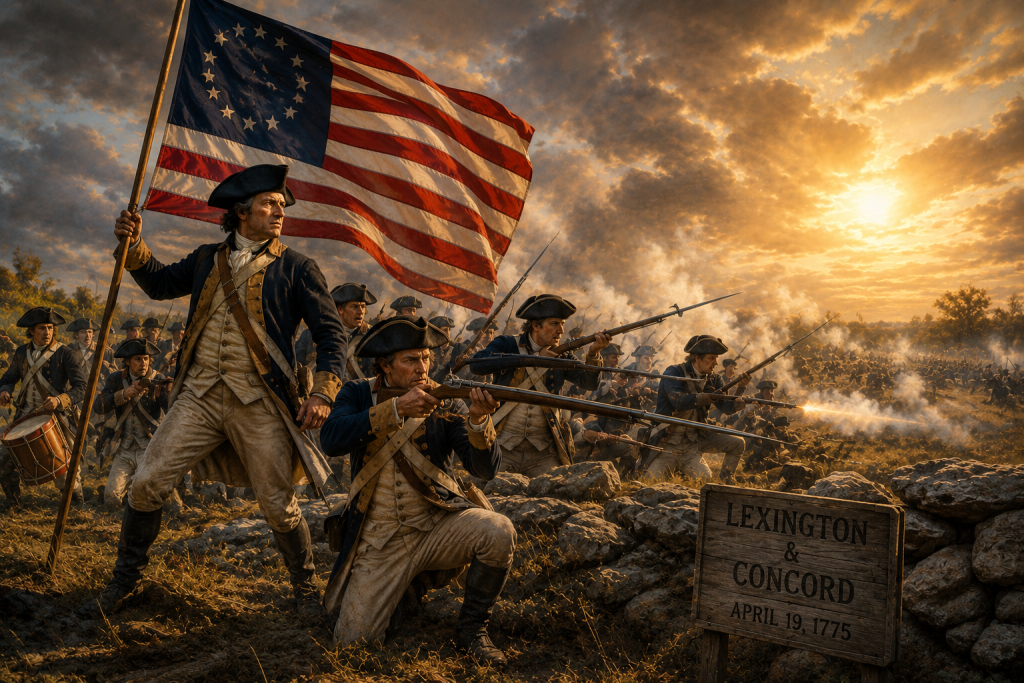
An artistic interpretation of Continental soldiers during the Battles of Lexington and Concord on April 19, 1775, the opening battles of the American Revolutionary War.
Winning independence required far more than signing a declaration. The colonies still faced one of the most powerful military forces in the world.
The Revolutionary War officially began in April 1775 with the Battles of Lexington and Concord. Over the next eight years, American forces faced enormous hardships, including shortages of food, supplies, weapons, and training. Despite these challenges, the Continental Army remained committed to the cause of independence.
General George Washington’s leadership proved essential during difficult periods such as the harsh winter at Valley Forge. Although the army endured hunger, cold, and illness, the soldiers emerged stronger and better prepared for future battles thanks in part to the training provided by Baron Friedrich von Steuben.
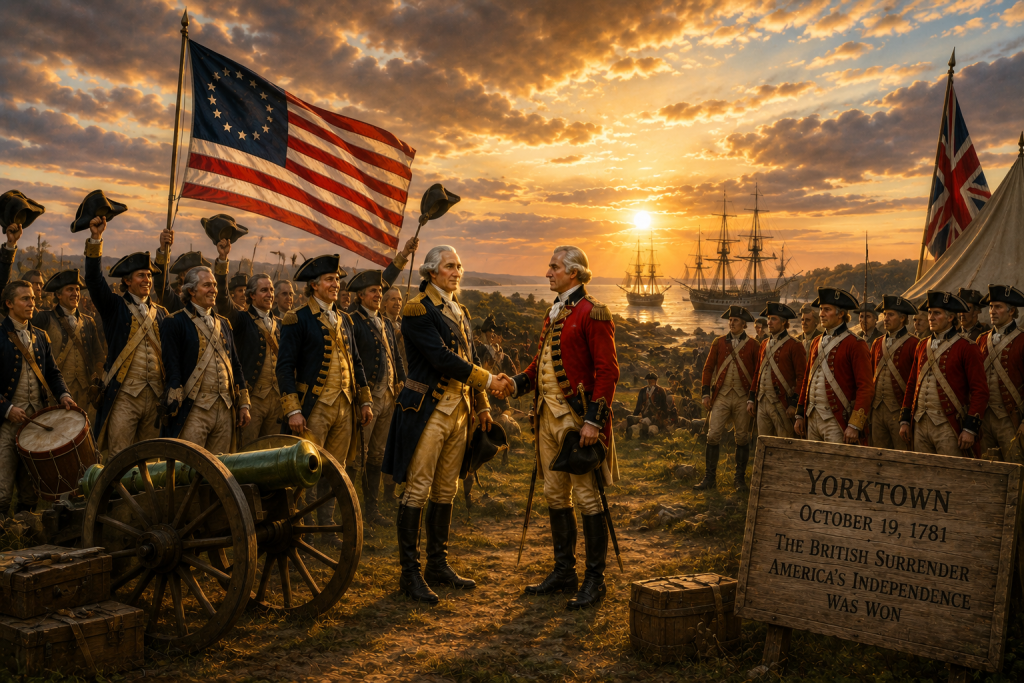
Several victories became turning points in the war. The Battle of Saratoga in 1777 convinced France to formally support the American cause, providing military assistance that proved invaluable. Later, the decisive victory at Yorktown in 1781 effectively ended major fighting and led to peace negotiations.
An artistic interpretation of the American victory at the Battle of Yorktown on October 19, 1781, the decisive campaign that led to the end of the Revolutionary War and secured American independence.
The Treaty of Paris, signed in 1783, officially recognized the independence of the United States.
The Revolutionary War demonstrated the determination of people willing to defend their beliefs despite overwhelming odds. Their courage laid the foundation for a nation built upon representative government and the rule of law.
Building the United States During America 250
Independence marked the beginning of a new chapter rather than the end of the story. The young nation faced enormous challenges as it worked to establish a stable government, expand its economy, and unite people with diverse backgrounds and viewpoints.
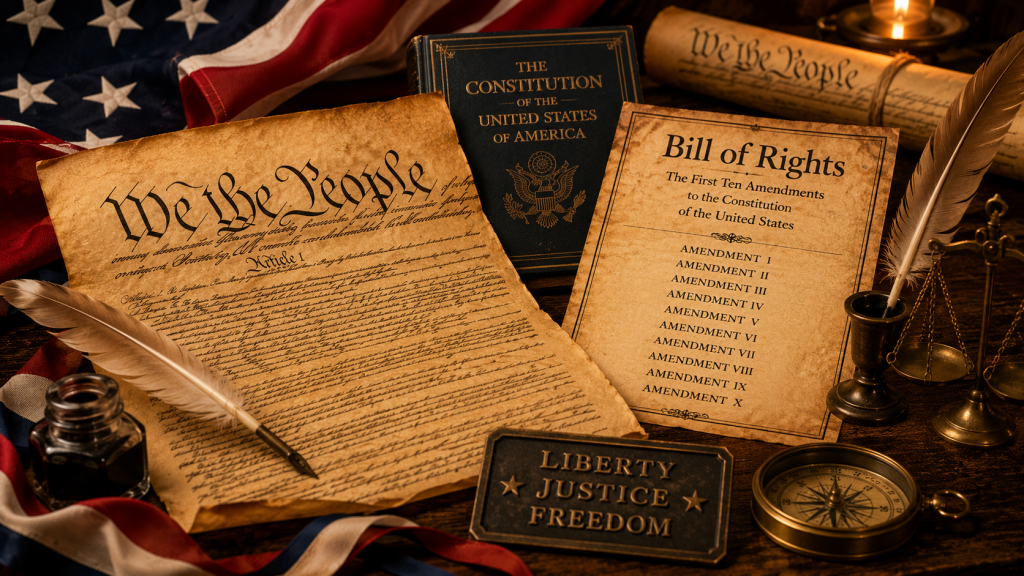
In 1787, delegates gathered in Philadelphia to draft the United States Constitution. This remarkable document established three branches of government designed to balance power while protecting the rights of citizens.
An artistic interpretation of the United States Constitution and the Bill of Rights, the founding documents that established the framework of American government and protected the rights and freedoms of its citizens.
Two years later, the Bill of Rights added the first ten amendments to the Constitution, guaranteeing fundamental freedoms such as freedom of speech, freedom of religion, freedom of the press, and the right to due process.
During the following centuries, the United States experienced extraordinary growth. New states joined the Union, railroads connected communities across the continent, industries transformed the economy, and scientific discoveries improved everyday life.
The nation also faced difficult chapters, including the Civil War, economic depressions, and struggles over civil rights. These events challenged Americans to continue striving toward the ideals expressed in the Declaration of Independence and the Constitution.
Throughout its history, the United States has also become a global leader in innovation. American inventors, scientists, entrepreneurs, artists, educators, and explorers have contributed advancements in medicine, aviation, communications, space exploration, agriculture, and technology that have benefited people around the world.
An artistic interpretation celebrating America’s remarkable journey of innovation, from the Industrial Revolution and the Wright brothers to the Apollo Moon landing, modern transportation, and today’s technological advancements.
America’s story is one of constant growth, reflection, and renewal—a nation continuing to learn from its past while preparing for its future.
America 250 Through the Eyes of Collectors
History comes alive through the objects that connect us to the past, and collectors play an important role in preserving those connections.
Across the country, museums, historical societies, veterans, and private collectors safeguard artifacts that tell America’s story. From Revolutionary War reproductions and Civil War memorabilia to vintage coins, postage stamps, patriotic posters, military uniforms, political campaign items, and commemorative medals, these pieces help preserve the nation’s heritage for future generations.
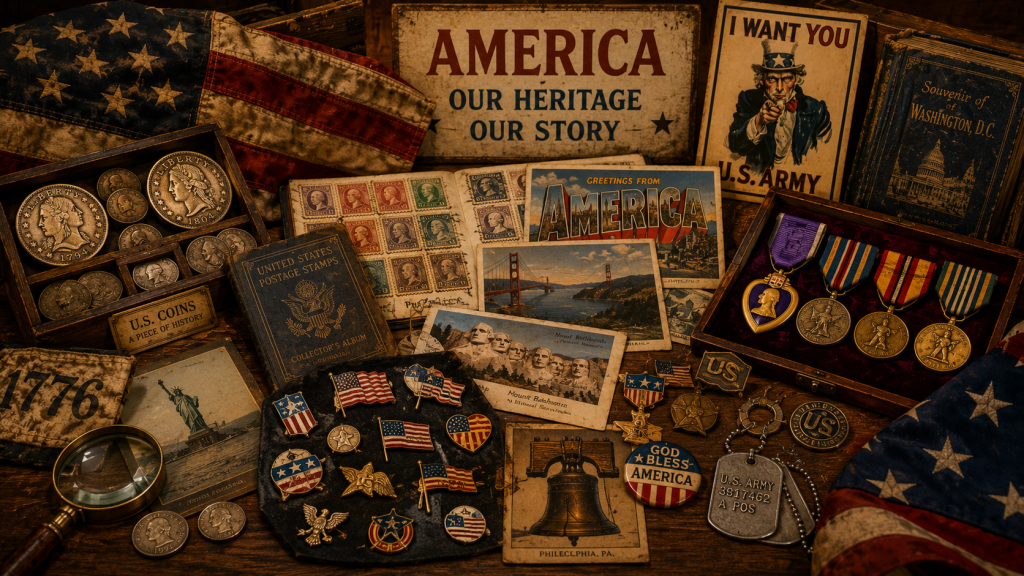
A collection of historic Americana memorabilia showcasing vintage coins, postage stamps, patriotic pins, military medals, historic postcards, and American flags that help preserve the nation’s rich heritage.
Coins and stamps often commemorate important anniversaries, presidents, national parks, and historical achievements. Military memorabilia honors the service and sacrifice of generations of Americans who defended the nation. Vintage Fourth of July decorations, flags, postcards, and photographs provide a glimpse into how communities celebrated Independence Day throughout history.
Family heirlooms also hold tremendous historical value. Letters, photographs, military service records, diaries, and personal keepsakes help preserve stories that might otherwise be forgotten. These items remind us that history is not only found in museums—it also lives within our own families.
At Collectors’ Pit Stop, we believe collecting is about more than owning interesting items. It is about preserving stories, celebrating craftsmanship, and passing history from one generation to the next.
How America Is Celebrating Its 250th Birthday
Communities across the United States are commemorating America 250 with a wide variety of events designed to educate, inspire, and bring people together.
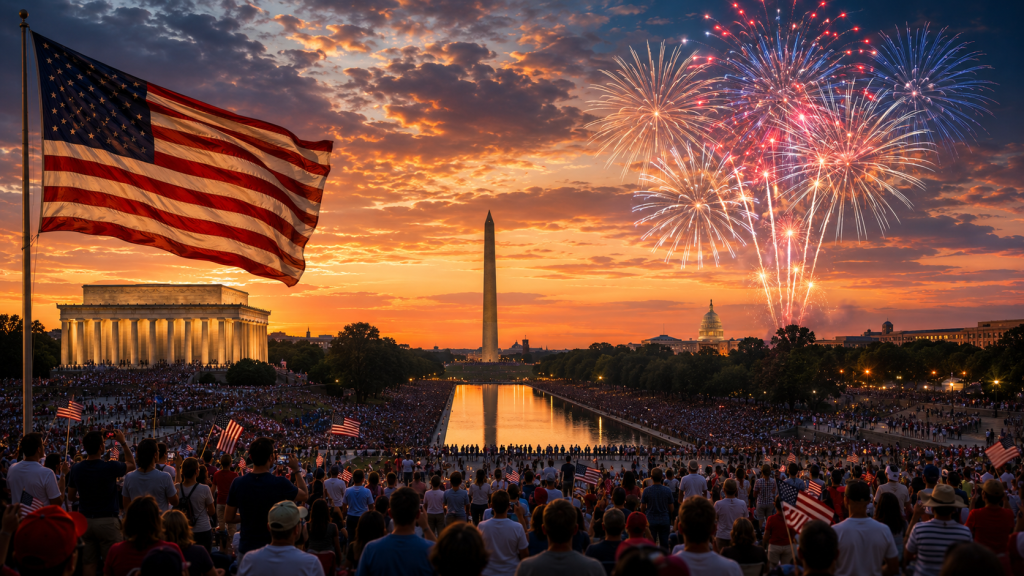
A patriotic Fourth of July celebration at the National Mall featuring fireworks, the American flag, and thousands of Americans gathering to celebrate the nation’s 250th anniversary.
Historic sites are hosting special exhibitions highlighting the nation’s founding and its continued evolution over the past two and a half centuries. Museums are displaying rare artifacts, original documents, and interactive exhibits that encourage visitors to explore American history in new ways.
Cities and towns are planning parades, concerts, fireworks, educational programs, veterans’ tributes, historical reenactments, and community festivals. Schools and libraries are using the anniversary as an opportunity to teach younger generations about the nation’s history and the responsibilities of citizenship.
Many families are celebrating in their own traditions by displaying the American flag, attending local events, visiting national parks and historic landmarks, or simply gathering together for cookouts and fireworks on Independence Day.
Whether celebrated through large public events or quiet family traditions, America 250 provides an opportunity for reflection, gratitude, and renewed appreciation for the nation’s remarkable journey.
Looking Toward America’s Next 250 Years
Anniversaries invite us to reflect on where we’ve been while encouraging us to think about where we’re going.
A patriotic Fourth of July celebration at the National Mall featuring fireworks, the American flag, and thousands of Americans gathering to celebrate the nation’s 250th anniversary.
America’s next chapter will be written by today’s children, students, workers, entrepreneurs, educators, first responders, service members, scientists, artists, and community leaders. The values of responsibility, innovation, service, and civic participation will continue shaping the nation for generations to come.
Preserving history remains an important part of that journey. By protecting historic landmarks, maintaining museums, recording family stories, and sharing traditions with younger generations, Americans help ensure that the lessons of the past continue to guide the future.
The story of the United States has never been static. Each generation contributes its own chapter, building upon the accomplishments and experiences of those who came before. That continuing journey is one of the greatest strengths of the American experience.
Conclusion
As the United States celebrates America 250, we honor far more than a date in history. We celebrate the courage of those who declared independence, the sacrifices of generations who defended freedom, and the countless individuals whose hard work, creativity, and dedication have helped shape the nation over the past 250 years.
America’s story is one of perseverance, innovation, and an ongoing pursuit of the ideals expressed in the Declaration of Independence. While the nation has experienced moments of triumph as well as periods of challenge, its history continues to inspire reflection, learning, and hope for the future.
For collectors, historians, veterans, families, and anyone who appreciates the past, this anniversary serves as a reminder that preserving history is one of the greatest gifts we can pass to future generations. Every photograph, document, coin, flag, letter, and family keepsake helps tell the story of America and the people who built it.
As fireworks light the night sky and communities gather to celebrate Independence Day, may America 250 inspire all of us to appreciate our shared history, honor those who came before us, and look toward the future with optimism, gratitude, and a renewed commitment to the principles that continue to unite our nation.
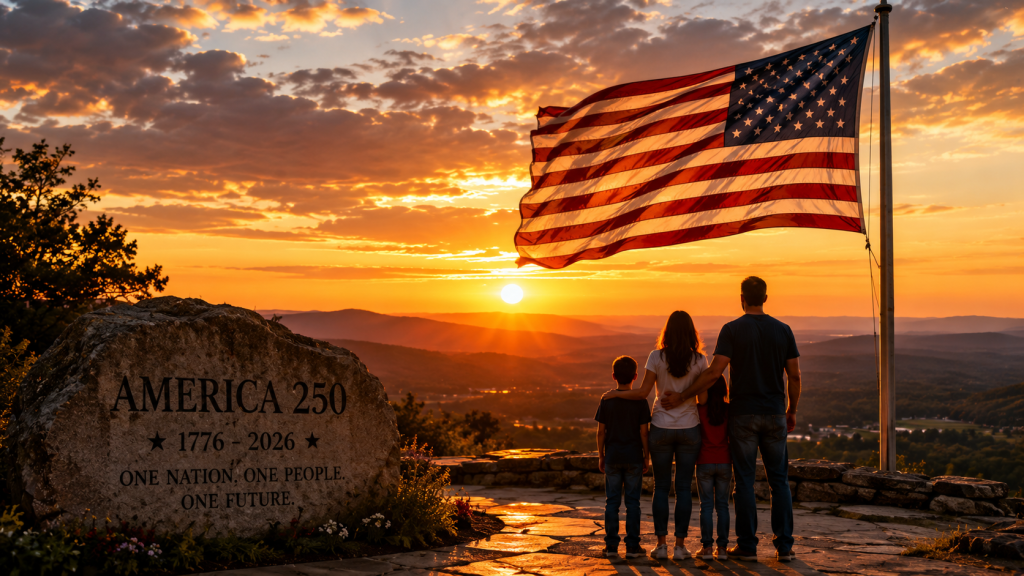
A family stands together beneath the American flag at sunset, reflecting on 250 years of freedom, unity, sacrifice, and hope for the future of the United States.
Happy 250th Birthday, America. Here’s to the next chapter of your remarkable journey. 🇺🇸