
In This Guide
The Monster That Changed Cinema Forever (Godzilla History)
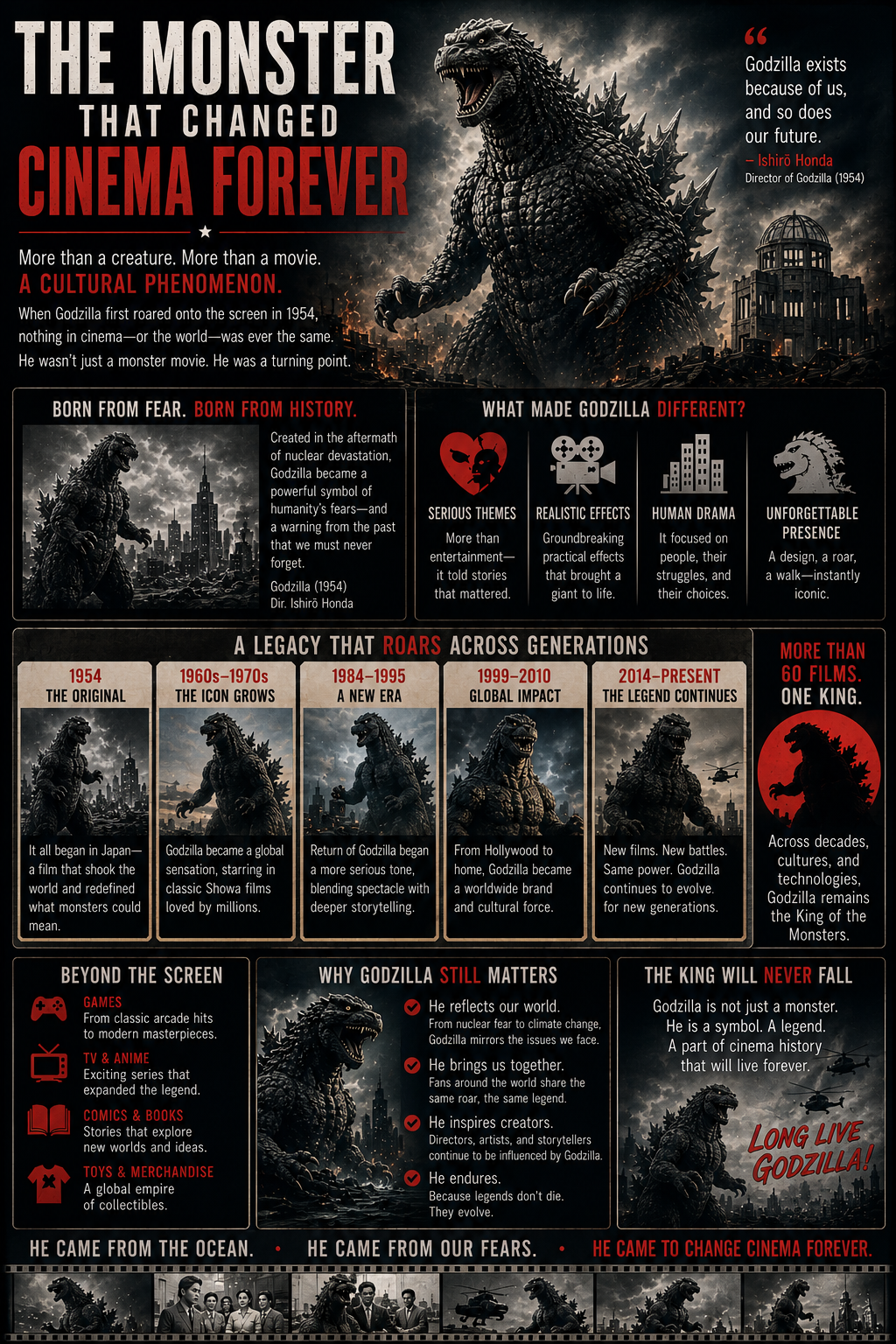
For more than seventy years, one giant creature has captured the imagination of movie fans around the world. From black-and-white film reels in post-war Japan to modern blockbuster movies filled with breathtaking special effects, Godzilla has remained one of the most recognizable and beloved monsters ever created.
To many people, Godzilla is simply a giant monster that destroys cities. But his story is far deeper than that. Godzilla represents history, culture, imagination, resilience, and the incredible creativity of Japanese filmmaking.
Whether you’re a lifelong fan, a movie enthusiast, or someone discovering the King of the Monsters for the first time, understanding Godzilla’s origins helps explain why this legendary creature continues to inspire generations of collectors and fans.
What makes Godzilla truly unique is that he has never been just a movie monster. Since his debut in 1954, he has served as a reflection of the fears, hopes, and challenges faced by society. Through different eras and generations, Godzilla has evolved alongside the world itself. Sometimes he has been portrayed as a terrifying force of destruction. Other times he has emerged as a protector, anti-hero, or even a symbol of humanity’s struggle to survive against overwhelming odds.
Few fictional characters have demonstrated the staying power that Godzilla has achieved. While countless movie franchises have come and gone, the King of the Monsters has remained relevant by constantly adapting to changing times while staying true to his origins. His stories have tackled themes such as nuclear weapons, environmental destruction, scientific responsibility, and humanity’s relationship with nature.
Godzilla’s influence extends far beyond the movie screen. His image has appeared on toys, collectibles, comic books, television programs, video games, clothing, artwork, and museum exhibits around the world. For collectors, Godzilla represents more than merchandise—he represents decades of memories, nostalgia, and a shared passion that connects fans across cultures and generations.
Today, Godzilla stands as one of the most successful and influential characters in entertainment history. His unmistakable roar, towering silhouette, and powerful presence have become symbols recognized by millions worldwide. What began as a Japanese film in 1954 has grown into a global phenomenon that continues to inspire filmmakers, artists, collectors, and fans alike.
The story of Godzilla is more than the story of a monster. It is the story of a cultural icon whose legacy continues to grow with every generation that discovers the King of the Monsters.
The Birth of Godzilla in 1954
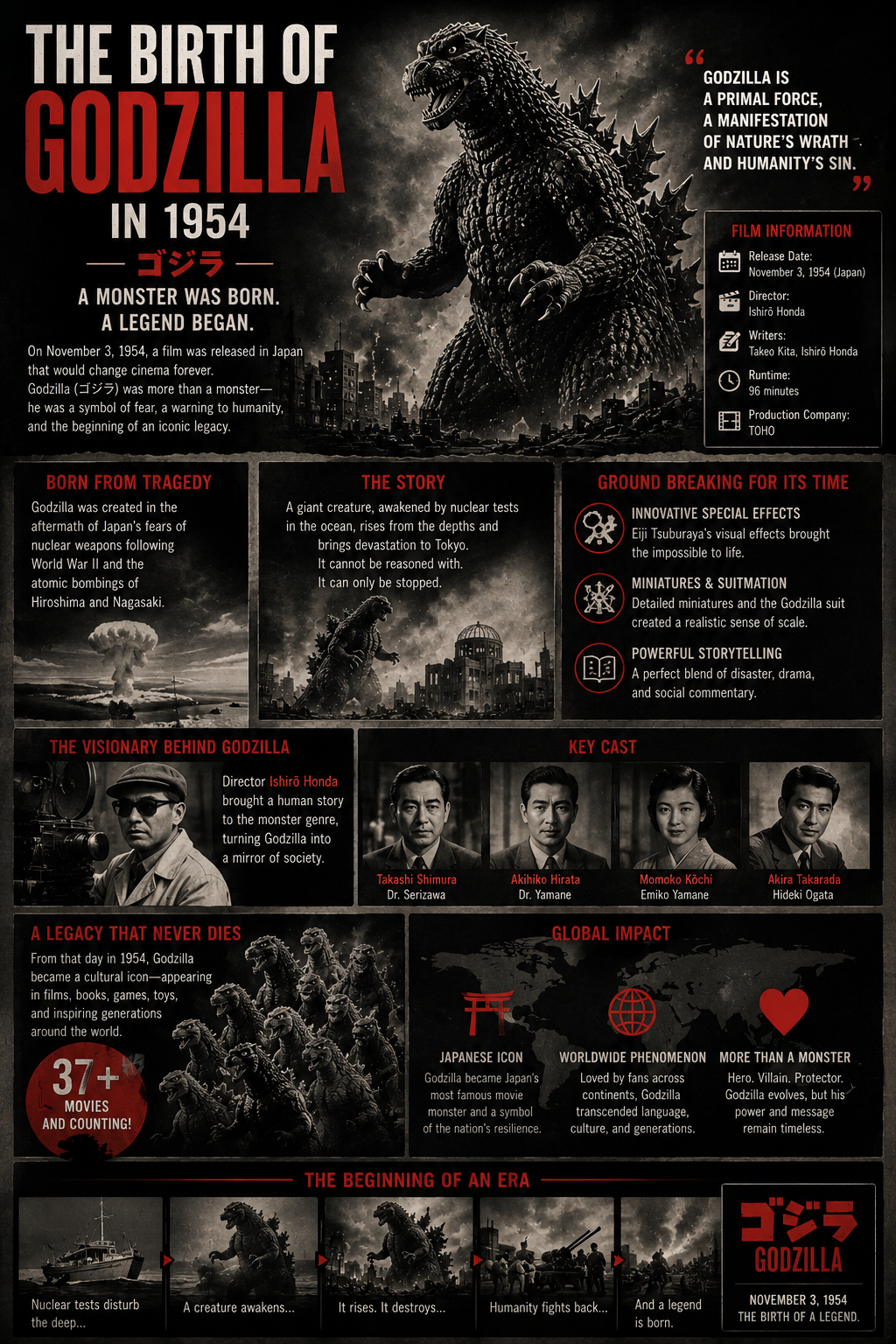
Godzilla first appeared in 1954 with the release of the groundbreaking Japanese film:
Created by Tomoyuki Tanaka, directed by Ishirō Honda, and brought to life through special effects by Eiji Tsuburaya, the film introduced audiences to a terrifying prehistoric creature awakened and mutated by nuclear testing.
Japan was still recovering from the devastation of World War II. The memories of Hiroshima and Nagasaki remained fresh in the minds of many Japanese citizens. As a result, Godzilla became much more than a movie monster.
He became a symbol of the fears surrounding nuclear weapons and the destructive power of mankind’s technological advancements.
In 1954, Japan was shaken by the Lucky Dragon No. 5 incident, in which a Japanese fishing vessel was exposed to radioactive fallout from a U.S. hydrogen bomb test in the Pacific Ocean. The event reignited public fears about nuclear weapons and radiation. Many historians believe this real-world tragedy helped inspire the creation of Godzilla, giving the monster a deeper meaning as a symbol of nuclear destruction and humanity’s struggle with the consequences of technological power.
The original film was dark, serious, and emotional. Unlike many monster movies of its era, it carried a powerful message that resonated with audiences worldwide.
How Godzilla Was Brought to Life
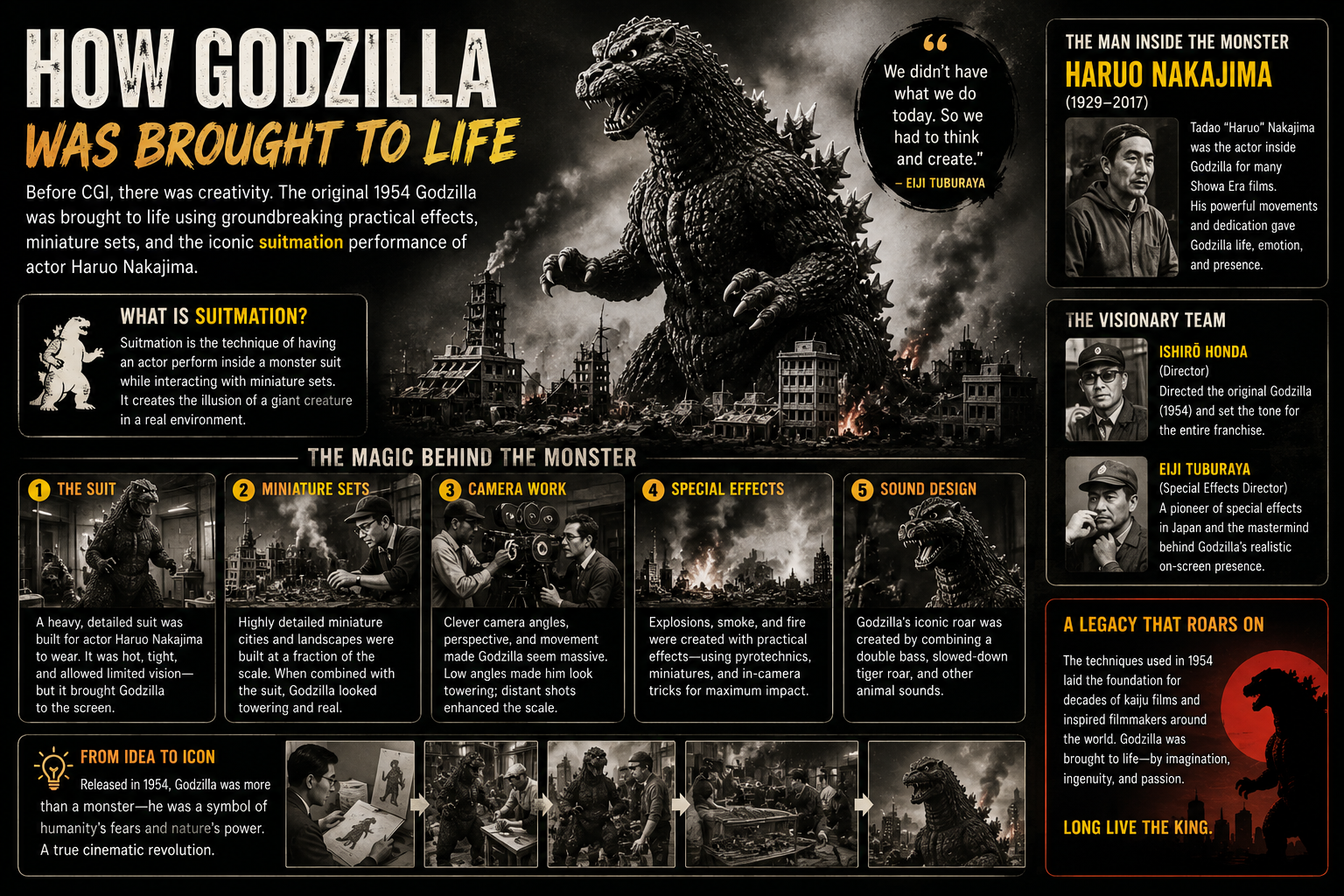
Long before computer-generated imagery existed, filmmakers relied on creativity and craftsmanship.
The original Godzilla was portrayed by actor Haruo Nakajima, who wore a heavy rubber suit while performing on elaborate miniature city sets.
Haruo Nakajima spent hours studying the movements of bears, elephants, and other large animals to develop Godzilla’s unique walk. The original suit weighed close to 220 pounds and became extremely hot under studio lights. Despite the physical challenges, Nakajima’s performance gave Godzilla personality, emotion, and presence, helping transform a man in a suit into one of cinema’s most iconic characters.
This filmmaking technique became known as “suitmation,” a uniquely Japanese style of special effects that combined detailed miniatures, practical effects, pyrotechnics, and costumed performers.
The results were groundbreaking for their time and helped establish the foundation of what would later become the kaiju genre.
What Does “Kaiju” Mean?
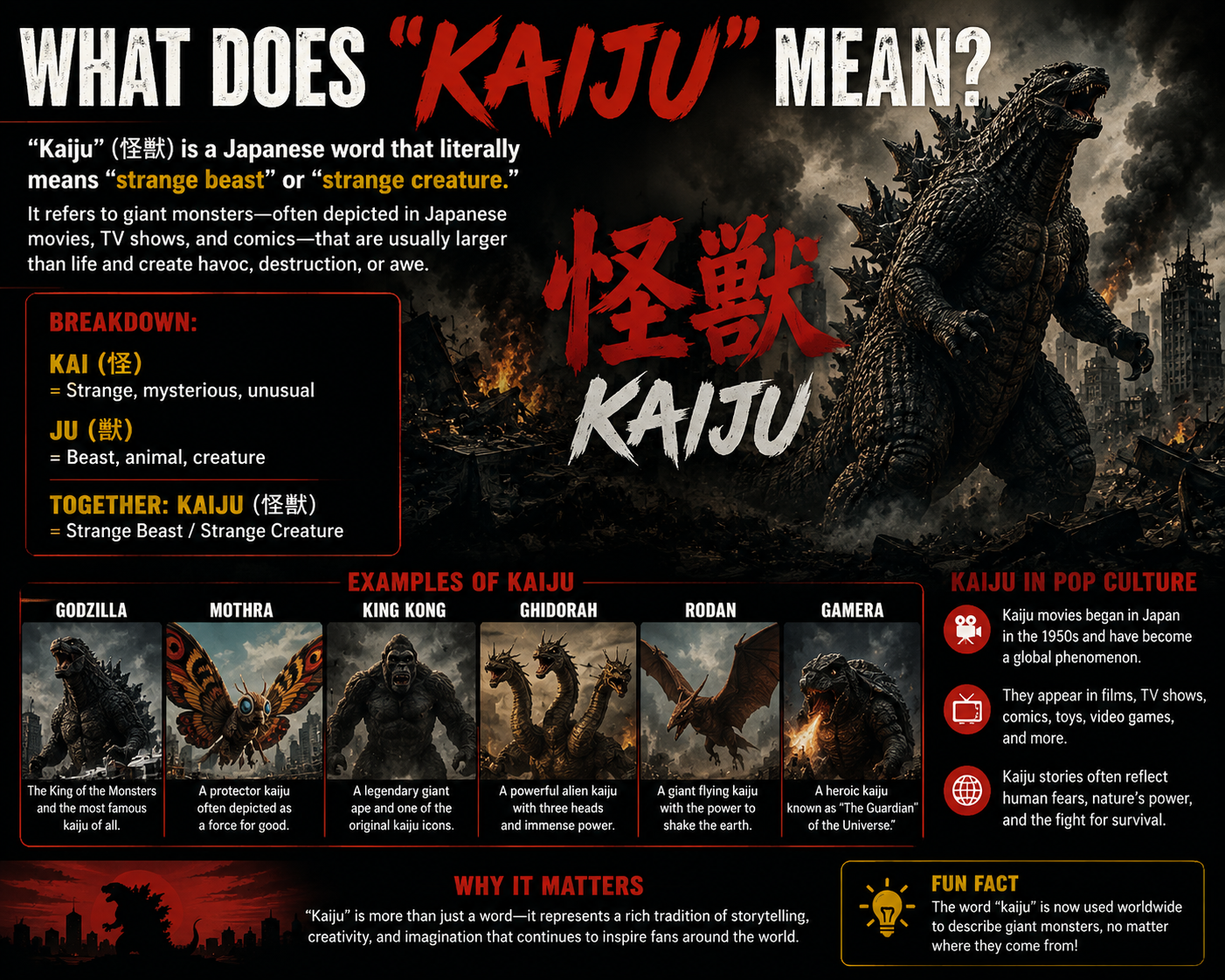
The Japanese word “Kaiju” (怪獣) translates roughly to “strange beast” or “giant monster.” The term is used to describe enormous creatures that appear in Japanese films, television shows, comics, and popular culture. While Godzilla is undoubtedly the most famous kaiju in history, he is far from the only legendary monster to emerge from Japan’s rich tradition of monster storytelling.
Over the decades, Godzilla has shared the screen with a wide variety of memorable kaiju, each bringing unique abilities, personalities, and storylines to the franchise. Some of the most iconic include Mothra, the giant guardian moth; Rodan, the massive prehistoric flying creature; King Ghidorah, the three-headed dragon often considered Godzilla’s greatest rival; Mechagodzilla, the powerful robotic counterpart; Gigan, one of Godzilla’s most dangerous alien enemies; and Anguirus, Godzilla’s loyal ally and one of the earliest monsters introduced in the series.
Together, these creatures helped transform Godzilla from a single film character into the centerpiece of an expansive cinematic universe. Their epic battles, unforgettable designs, and unique personalities have entertained audiences for generations while helping establish the kaiju genre as one of the most influential and enduring forms of science fiction and fantasy storytelling in movie history.
Today, the word “kaiju” is recognized around the world and has become synonymous with giant monster entertainment. From classic Japanese films to modern Hollywood productions, the influence of kaiju continues to grow, inspiring new stories, collectibles, video games, and generations of fans.
The Showa Era: Building a Legend
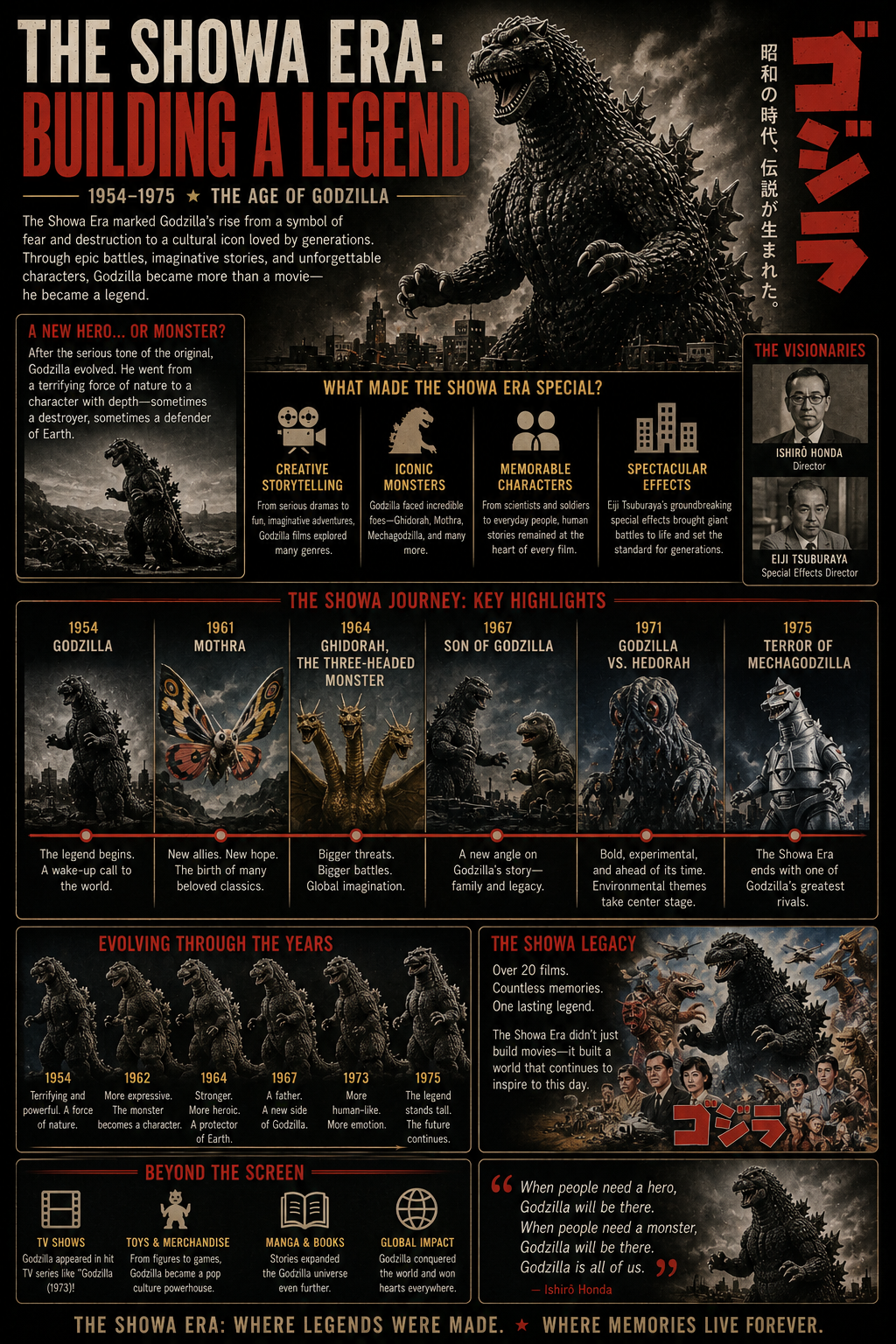
The first major era of Godzilla films is commonly known as the Showa Era, spanning from 1954 to 1975. Named after the reign of Emperor Showa (Hirohito), this period laid the foundation for everything that would follow in the Godzilla franchise.
During this era, Godzilla evolved dramatically. In the original 1954 film, he was portrayed as a terrifying force of nature and a symbol of nuclear devastation. As the series continued, however, audiences witnessed a gradual transformation. Godzilla shifted from destroyer to defender, eventually becoming a heroic figure who protected Earth from increasingly dangerous monsters, alien invaders, and cosmic threats.
The Showa Era introduced many of the franchise’s most iconic characters and villains. Fans were introduced to legendary kaiju such as Mothra, Rodan, King Ghidorah, Gigan, Hedorah, Mechagodzilla, and Anguirus. These memorable monsters helped create some of the most beloved battles in kaiju cinema and expanded Godzilla’s world far beyond the original film.
Movies such as King Kong vs. Godzilla (1962), Mothra vs. Godzilla (1964), Ghidorah, the Three-Headed Monster (1964), Destroy All Monsters (1968), and Godzilla vs. Mechagodzilla (1974) remain fan favorites to this day. Each film added new stories, monsters, and special effects that helped grow the franchise’s popularity around the world.
For many fans in the United States and other countries, Showa Era films became staples of Saturday afternoon television. Generations of children discovered Godzilla through local TV stations, creature features, and weekend movie marathons. These broadcasts introduced millions of viewers to Japanese monster movies and helped create lifelong fans and collectors.
Despite their limited budgets compared to modern productions, the Showa films showcased incredible creativity through practical effects, miniature city sets, pyrotechnics, and the famous suitmation performances that brought the monsters to life. The imagination and charm of these classic films continue to resonate with audiences decades later.
Many longtime fans still consider the Showa Era the heart and soul of the Godzilla franchise. It was a time when legends were created, unforgettable monsters were introduced, and the King of the Monsters firmly established himself as one of cinema’s most enduring icons.
The Heisei Era: A Return to Serious Storytelling
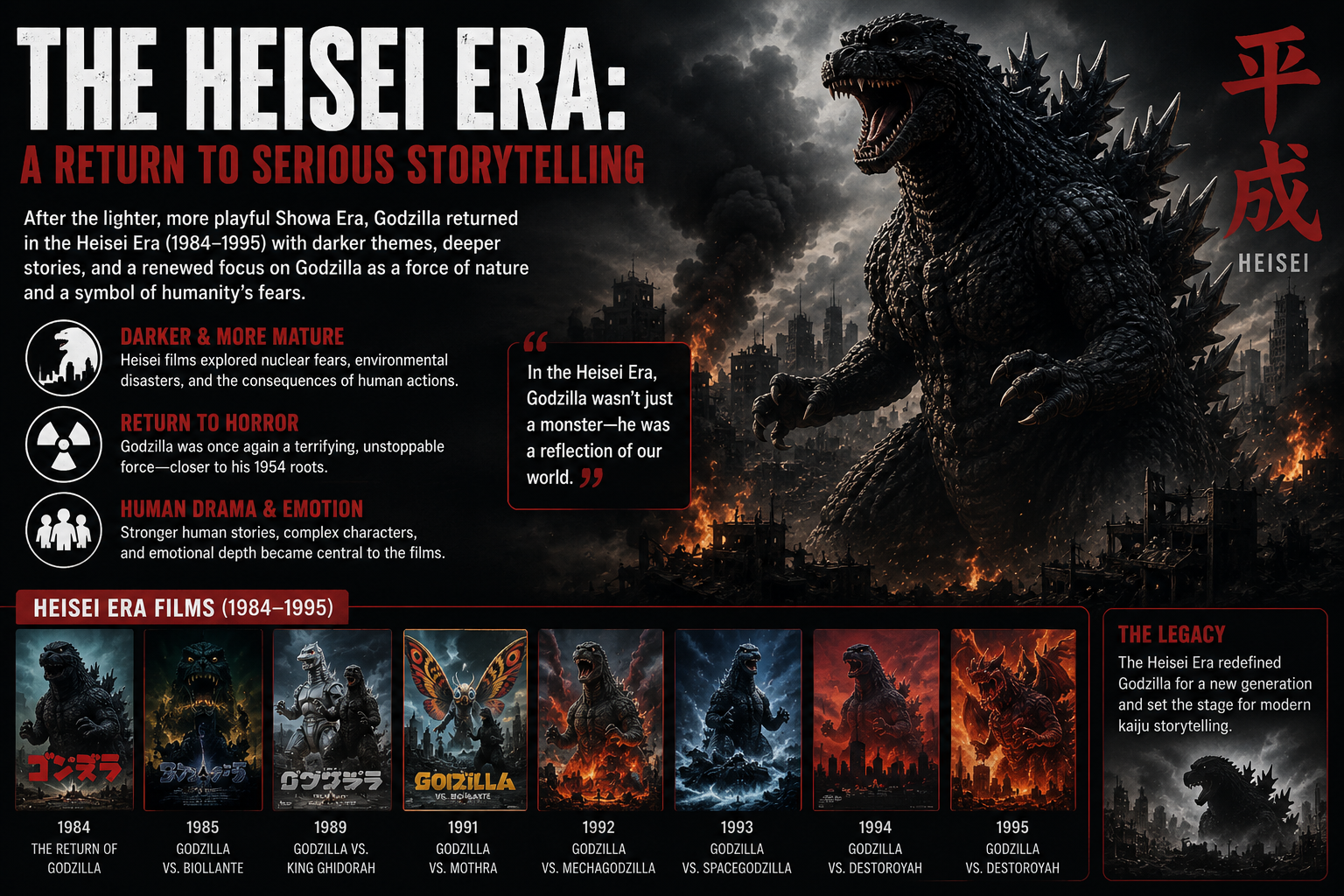
After nearly a decade away from theaters, Godzilla returned in 1984 with The Return of Godzilla (released in some countries as Godzilla 1985). This film marked the beginning of the Heisei Era, which ran from 1984 to 1995 and reintroduced the King of the Monsters to a new generation of fans.
Unlike many of the later Showa Era films, which often featured lighter stories and more family-friendly adventures, the Heisei Era returned Godzilla to his roots as a powerful and destructive force of nature. The darker tone echoed many of the themes that made the original 1954 film so memorable, including humanity’s relationship with technology, the dangers of unchecked scientific advancement, and the consequences of nuclear power.
One of the defining features of the Heisei Era was its interconnected storytelling. Rather than presenting mostly standalone adventures, the films followed a continuous timeline that allowed characters, events, and storylines to develop over multiple movies. This approach gave the franchise a greater sense of continuity and depth, making each installment feel like part of a larger story.
The Heisei Era also introduced some of the most popular monsters and characters in Godzilla history. Fans witnessed epic battles against powerful foes such as Biollante, Mecha-King Ghidorah, Battra, SpaceGodzilla, and the terrifying Destroyah. These creatures featured imaginative designs and helped create some of the most memorable confrontations ever seen in the franchise.
Advancements in special effects technology allowed filmmakers to produce larger-scale destruction scenes while continuing to rely heavily on practical effects, miniature sets, and suitmation. The result was a unique blend of traditional craftsmanship and modern filmmaking techniques that many fans still regard as the perfect balance between old and new.
Several films from this era have become fan favorites, including Godzilla vs. Biollante (1989), Godzilla vs. King Ghidorah (1991), Godzilla vs. Mechagodzilla II (1993), and Godzilla vs. Destroyah (1995). The emotional conclusion of the era, which saw Godzilla’s dramatic fate unfold on screen, remains one of the most powerful moments in the franchise’s history.
For collectors, the Heisei Era is especially significant because it produced some of the most sought-after action figures, posters, toys, and memorabilia ever released. The monster designs from this period continue to inspire modern collectibles and remain highly popular among fans around the world.
For many longtime enthusiasts, the Heisei Era represents the perfect balance between classic practical effects, serious storytelling, and unforgettable monster battles. It successfully honored Godzilla’s past while proving that the King of the Monsters could continue evolving for f
The Millennium Era and Global Popularity
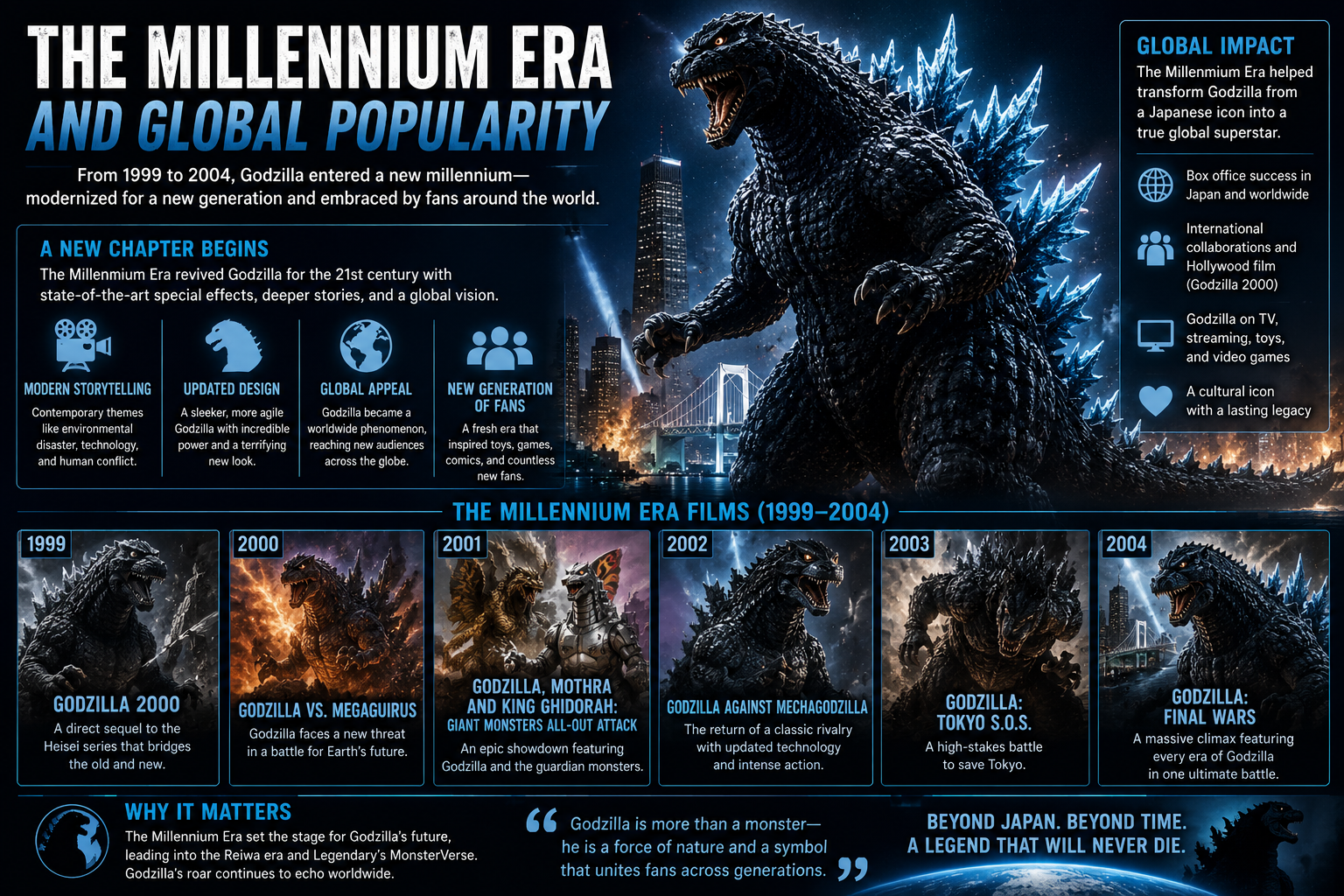
The late 1990s and early 2000s marked another important chapter in Godzilla’s history. Following the conclusion of the Heisei Era in 1995, Toho Studios reimagined the franchise once again, launching what fans now know as the Millennium Era, which spanned from 1999 to 2004.
Unlike the Heisei series, which followed a continuous storyline, most Millennium Era films served as standalone adventures. This approach gave filmmakers the freedom to experiment with new ideas, alternate timelines, and fresh interpretations of the King of the Monsters. Each film offered a unique vision of Godzilla while still honoring the legacy established by the original 1954 classic.
The era began with Godzilla 2000: Millennium (1999), which introduced a redesigned Godzilla and modernized visual effects for a new generation of moviegoers. Additional films such as Godzilla vs. Megaguirus (2000), Godzilla, Mothra and King Ghidorah: Giant Monsters All-Out Attack (2001), Godzilla Against Mechagodzilla (2002), Tokyo S.O.S. (2003), and Godzilla: Final Wars (2004) continued to push the franchise in exciting new directions.
One of the most celebrated aspects of the Millennium Era was its willingness to explore different interpretations of Godzilla. In some films, he returned to being a terrifying force of destruction, while in others he was portrayed as an unstoppable natural disaster or an almost supernatural presence. These creative approaches helped keep the character fresh while appealing to both longtime fans and newcomers.
At the same time, interest in Godzilla was growing rapidly outside of Japan. The rise of the internet allowed fans around the world to connect, share information, discuss films, and build online communities dedicated to kaiju culture. Collectors gained greater access to imported toys, action figures, books, model kits, posters, and exclusive merchandise that had once been difficult to obtain outside Japan.
The Millennium Era also coincided with a surge in popularity for collectibles. Companies produced highly detailed Godzilla figures, statues, and memorabilia that became prized additions to collections worldwide. As demand grew, Godzilla evolved from a beloved Japanese movie character into a global pop culture icon recognized by fans of all ages.
What began in 1954 as a uniquely Japanese response to the fears of the nuclear age had now become an international phenomenon. By the end of the Millennium Era, Godzilla’s influence extended far beyond movie theaters, reaching collectors, artists, gamers, and fans across the globe. The King of the Monsters was no longer just Japan’s monster—he belonged to the world.
Godzilla Comes to Hollywood
As Godzilla’s popularity continued to grow around the world, it was only a matter of time before Hollywood embraced the King of the Monsters. For decades, American audiences had enjoyed imported Godzilla films, television broadcasts, and home video releases. By the late 1990s, the character had become one of the most recognizable movie monsters on the planet.
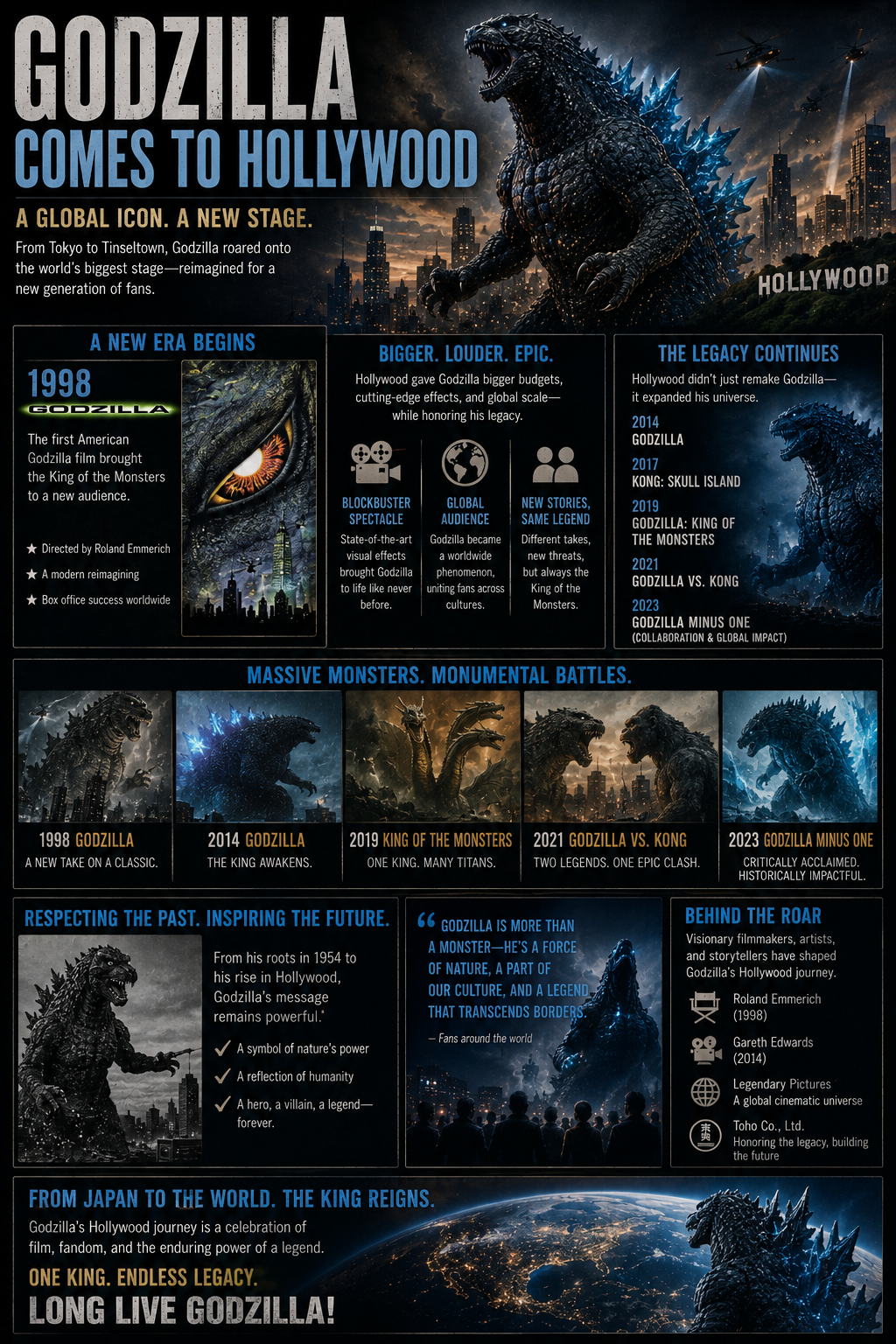
Hollywood’s first major attempt came with Godzilla (1998), directed by Roland Emmerich. While the film introduced Godzilla to a new generation of moviegoers and achieved commercial success, its interpretation of the character sparked debate among longtime fans. Nevertheless, the movie demonstrated the worldwide appeal of giant monster films and showed that Godzilla remained a powerful force in popular culture.
A new era began in 2014 when Legendary Pictures launched what would become known as the MonsterVerse. Starting with Godzilla (2014), filmmakers sought to honor the character’s Japanese roots while presenting him on a scale never before seen through modern visual effects technology. The film portrayed Godzilla as an ancient alpha predator whose presence restored balance to nature, introducing a fresh perspective while remaining faithful to the spirit of the original character.
The success of the MonsterVerse continued with Godzilla: King of the Monsters (2019), which brought legendary kaiju such as Mothra, Rodan, and King Ghidorah to life with stunning visual effects. For many fans, seeing these iconic monsters appear in a major Hollywood production was a dream come true and a tribute to decades of Godzilla history.
The franchise reached new heights with Godzilla vs. Kong (2021), delivering one of the most anticipated monster battles in cinematic history. The film united two of the most famous creatures ever created and introduced the world of kaiju to millions of new viewers. Its success further cemented Godzilla’s status as a global entertainment icon.
What makes Godzilla’s Hollywood journey remarkable is that the character never lost his identity. Despite advances in technology and changes in storytelling, Godzilla continues to represent themes that have resonated with audiences for more than seventy years. Whether portrayed as a destructive force, a guardian of balance, or a symbol of humanity’s relationship with nature, the King of the Monsters remains instantly recognizable.
Today, Godzilla stands as one of the few film characters capable of bridging cultures, languages, and generations. From his origins in post-war Japan to blockbuster theaters around the world, his legacy continues to grow. The success of Hollywood’s MonsterVerse has proven that Godzilla is not simply a Japanese icon—he is a worldwide phenomenon whose roar continues to echo across the globe.
Why Godzilla Remains Relevant Today
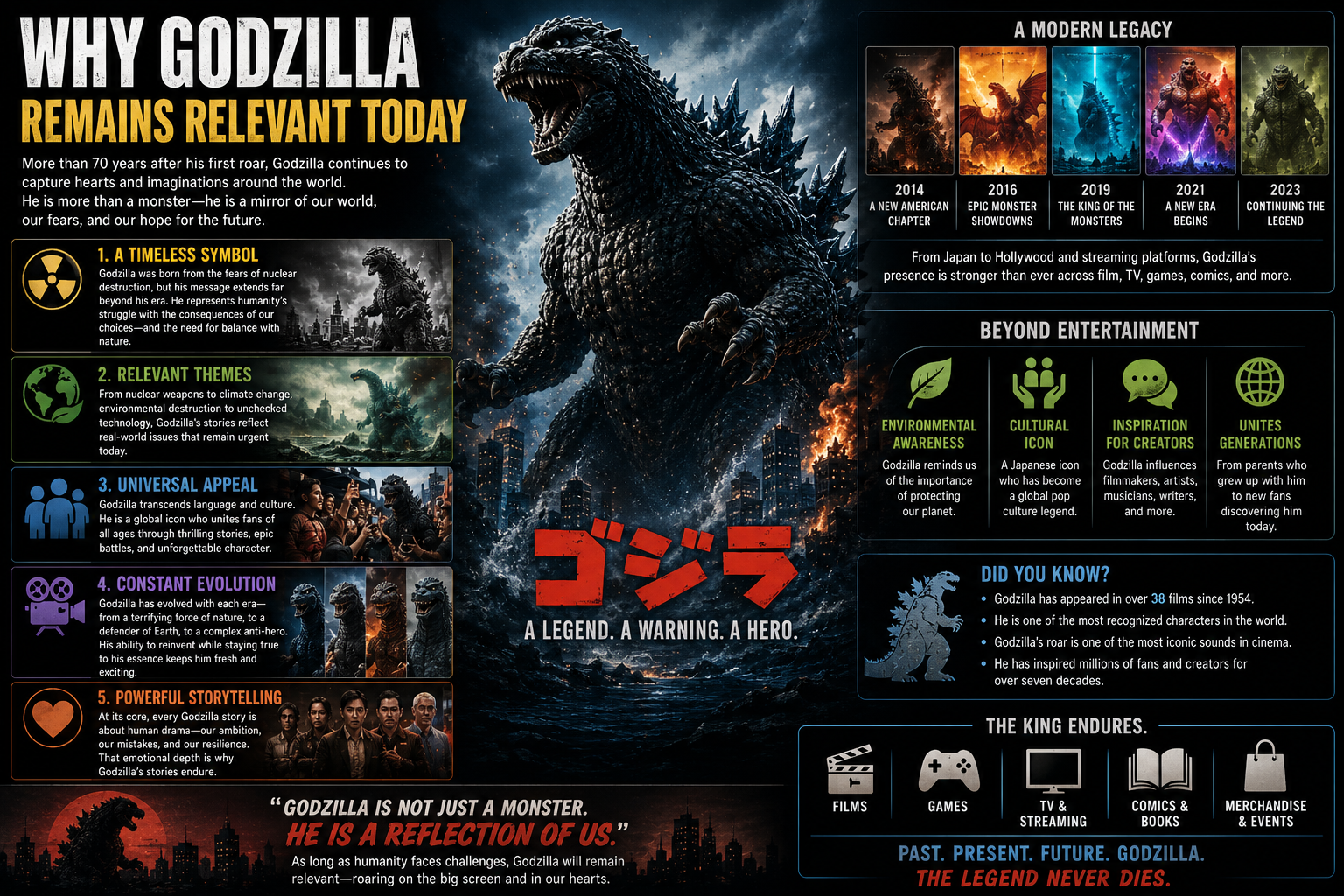
Many movie franchises come and go, fading from popular culture as trends change and new forms of entertainment emerge. Godzilla, however, has accomplished something few fictional characters ever achieve—he has remained relevant for more than seventy years while continuing to attract new generations of fans around the world.
One of the reasons for Godzilla’s enduring success is his ability to evolve while remaining true to his roots. Every generation sees something different in the King of the Monsters. Depending on the story being told, Godzilla can represent the immense power of nature, the consequences of humanity’s actions, the dangers of nuclear weapons, environmental concerns, scientific responsibility, survival against overwhelming odds, or even hope during difficult times.
Unlike many characters who remain unchanged, Godzilla adapts to reflect the concerns of the era in which he appears. In the 1950s, he symbolized the fears surrounding nuclear devastation. In later decades, his stories explored pollution, environmental destruction, technological advancement, and humanity’s relationship with the natural world. More recent films have continued this tradition by addressing themes that resonate with modern audiences while preserving the character’s legendary status.
Godzilla’s relevance extends beyond the movie screen. He has become a global cultural icon whose influence can be found in television, comic books, video games, toys, collectibles, artwork, and popular culture. His unmistakable silhouette and thunderous roar are recognized by millions of people, even those who have never seen a Godzilla film.
Collectors have also played an important role in preserving Godzilla’s legacy. From vintage toys and model kits to high-end statues and limited-edition figures, fans continue to celebrate the franchise through collections that span decades of movie history. The passion of the collecting community has helped introduce Godzilla to younger generations while keeping the character’s rich history alive.
Another reason Godzilla remains relevant is his universal appeal. Regardless of language, culture, or nationality, audiences understand the excitement of watching a towering creature challenge the limits of human power. At the same time, the deeper themes behind the stories allow viewers to connect with Godzilla on a more meaningful level than a typical movie monster.
Each generation discovers something new in the King of the Monsters. For some, he is a symbol of resilience. For others, he is a warning about humanity’s relationship with technology and nature. For many fans, he is simply a beloved character whose adventures have provided decades of entertainment and unforgettable memories.
That remarkable ability to evolve while remaining instantly recognizable has allowed Godzilla to endure for more than seven decades. As long as stories continue to inspire imagination and spark conversation, the King of the Monsters will remain one of cinema’s most powerful and enduring icons.
A Personal Connection to Godzilla
One of the great things about collecting is that sometimes another collector’s passion inspires your own. Every collection tells a story, and some collections leave a lasting impression long after you’ve seen them.
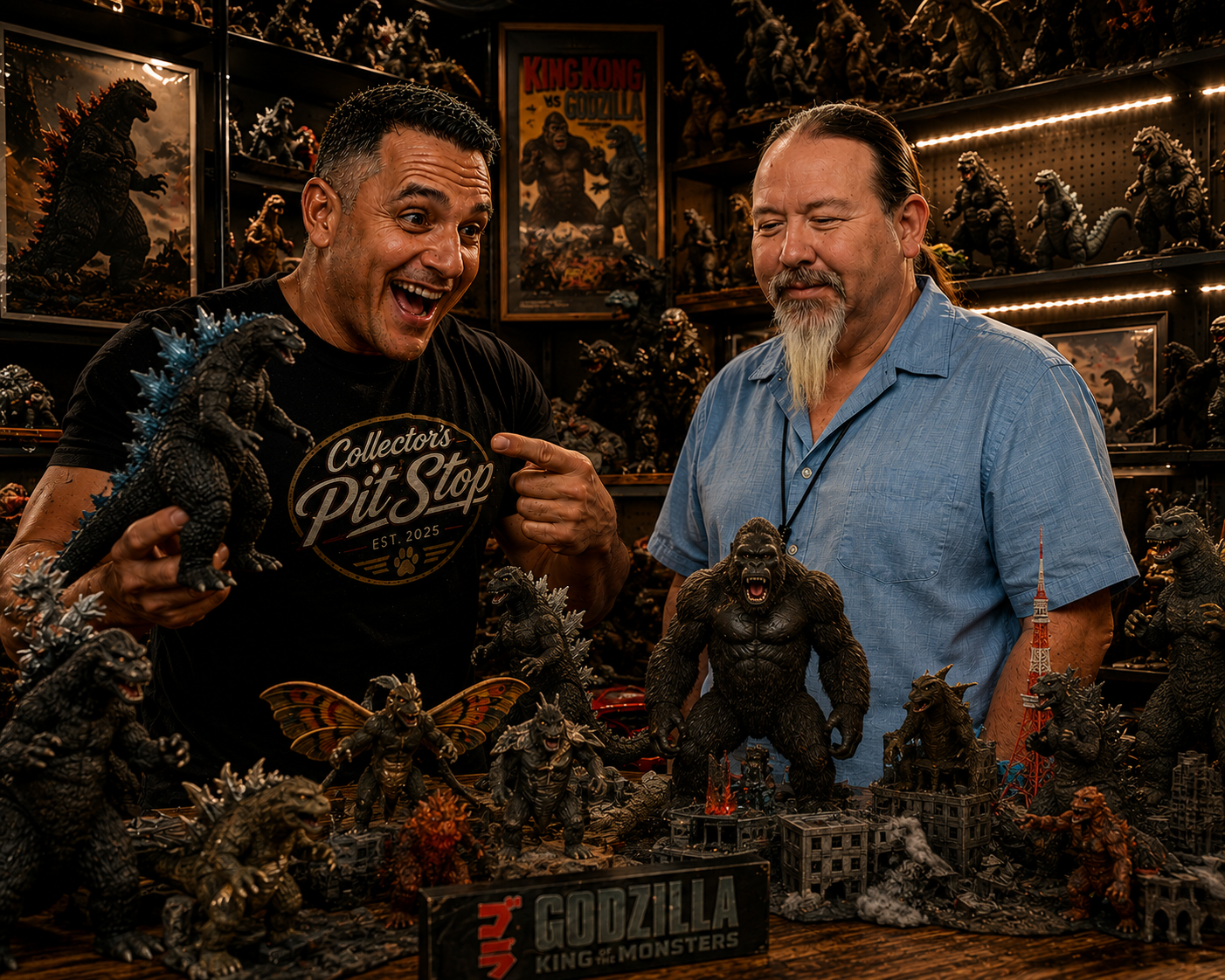
Over the years, I had the opportunity to see a coworker’s incredible Godzilla collection. What began as a casual conversation quickly turned into an unforgettable look at decades of Godzilla history. Shelf after shelf was filled with figures, memorabilia, collectibles, and pieces representing different eras of the franchise. From classic versions of the King of the Monsters to modern interpretations, the collection showcased the evolution of one of cinema’s most iconic characters.
What impressed me most wasn’t simply the size of the collection—it was the passion behind it. Each piece represented years of dedication, research, and appreciation for the character and the stories that have captivated fans for generations. Looking through the collection, it became clear that Godzilla is more than a movie monster. He is a cultural icon whose influence extends far beyond the screen.
Seeing that collection reminded me just how large and dedicated the Godzilla community truly is. Across the world, fans gather at conventions, share collections online, discuss favorite films, and preserve pieces of kaiju history. Whether someone owns a handful of figures or an entire room dedicated to Godzilla memorabilia, the enthusiasm and appreciation for the franchise are easy to recognize.
As a collector myself, experiences like this reinforce why collecting is about much more than simply owning items. Collecting is about preserving memories, sharing stories, and connecting with others who appreciate the same interests. Every collectible has a story behind it, and every collection reflects the passion of the person who built it.
That visit not only gave me a greater appreciation for the Godzilla franchise, but it also reminded me why collecting remains such a rewarding hobby. The friendships, conversations, and memories created through collecting are often just as valuable as the collectibles themselves.
A Special Memory from Shibuya, Tokyo, Japan
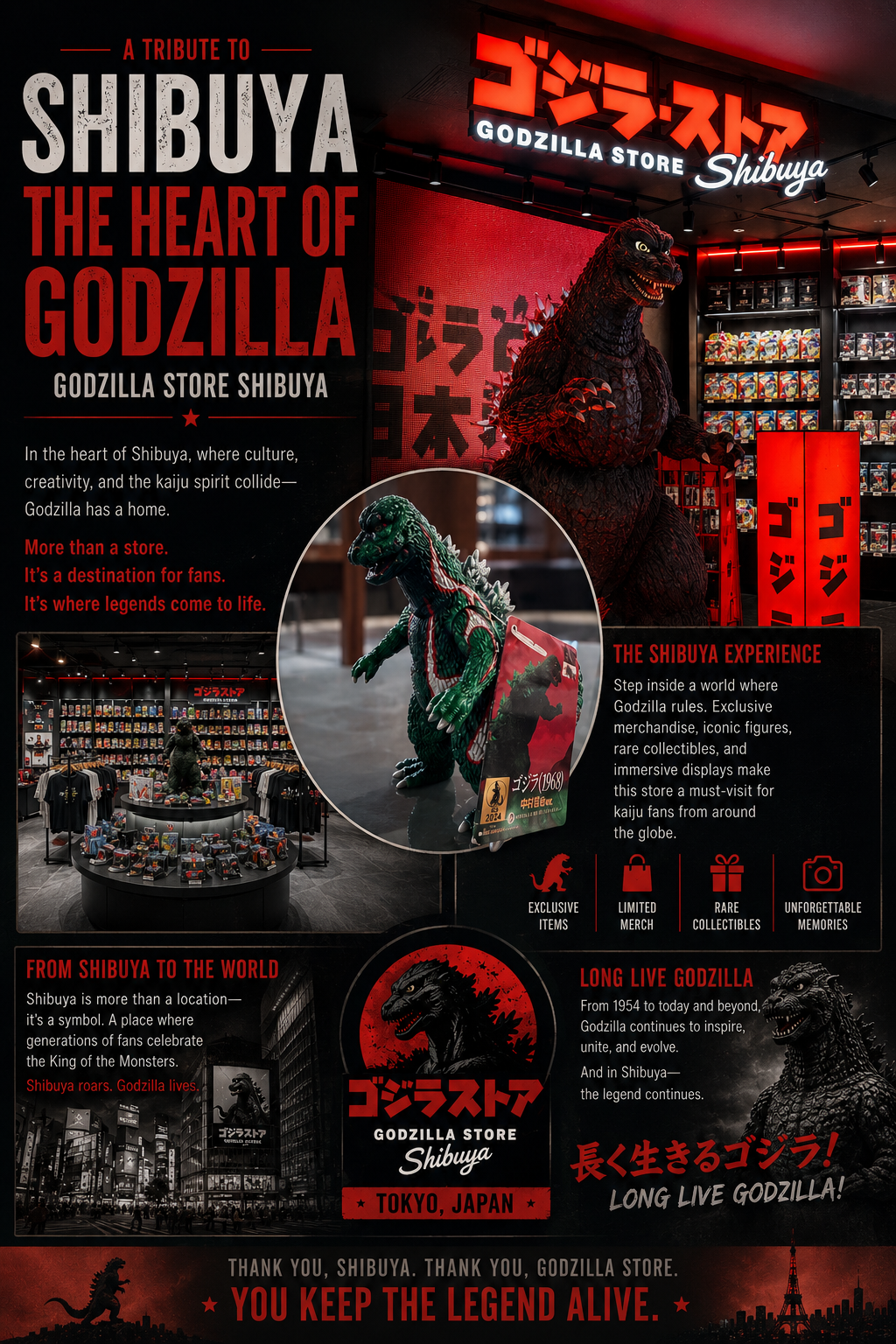
My appreciation for Japanese collectibles grew even deeper during a memorable trip to Japan. While there were many incredible experiences throughout the journey, one of the highlights was visiting the famous Godzilla Store Shibuya in Tokyo.
For a lifelong collector and fan of pop culture, stepping into the store felt like entering a place where the history and legacy of the King of the Monsters came to life. Everywhere I looked, there were displays filled with exclusive merchandise, detailed figures, collectibles, apparel, and memorabilia representing decades of Godzilla history. Towering displays and iconic imagery celebrated one of Japan’s greatest cultural creations, creating an experience unlike anything I had ever seen before.
What made the visit even more special was knowing I was standing in the country where Godzilla was born. Surrounded by fellow fans and collectors, I gained a greater appreciation for the impact the character has had not only in Japan but throughout the world. The passion and enthusiasm shared by visitors from different countries demonstrated just how universal Godzilla’s appeal has become.
Of course, I couldn’t leave without bringing home a special souvenir. The Godzilla figure I purchased in Shibuya is more than just another collectible sitting on a shelf. Every time I see it, I’m reminded of walking through the busy streets of Tokyo, experiencing the energy of Shibuya, and visiting one of the most iconic destinations for Godzilla fans anywhere in the world.
For collectors, items like these become much more than objects. They become personal connections to places, experiences, and memories that stay with us long after the trip is over. That figure represents not only a beloved character but also a special moment in my collecting journey—one that deepened my appreciation for Godzilla, Japanese culture, and the stories that make collecting so rewarding.
Some collectibles are valuable because they are rare.
Others are valuable because of the memories attached to them.
This one will always be both.
More Than a Monster
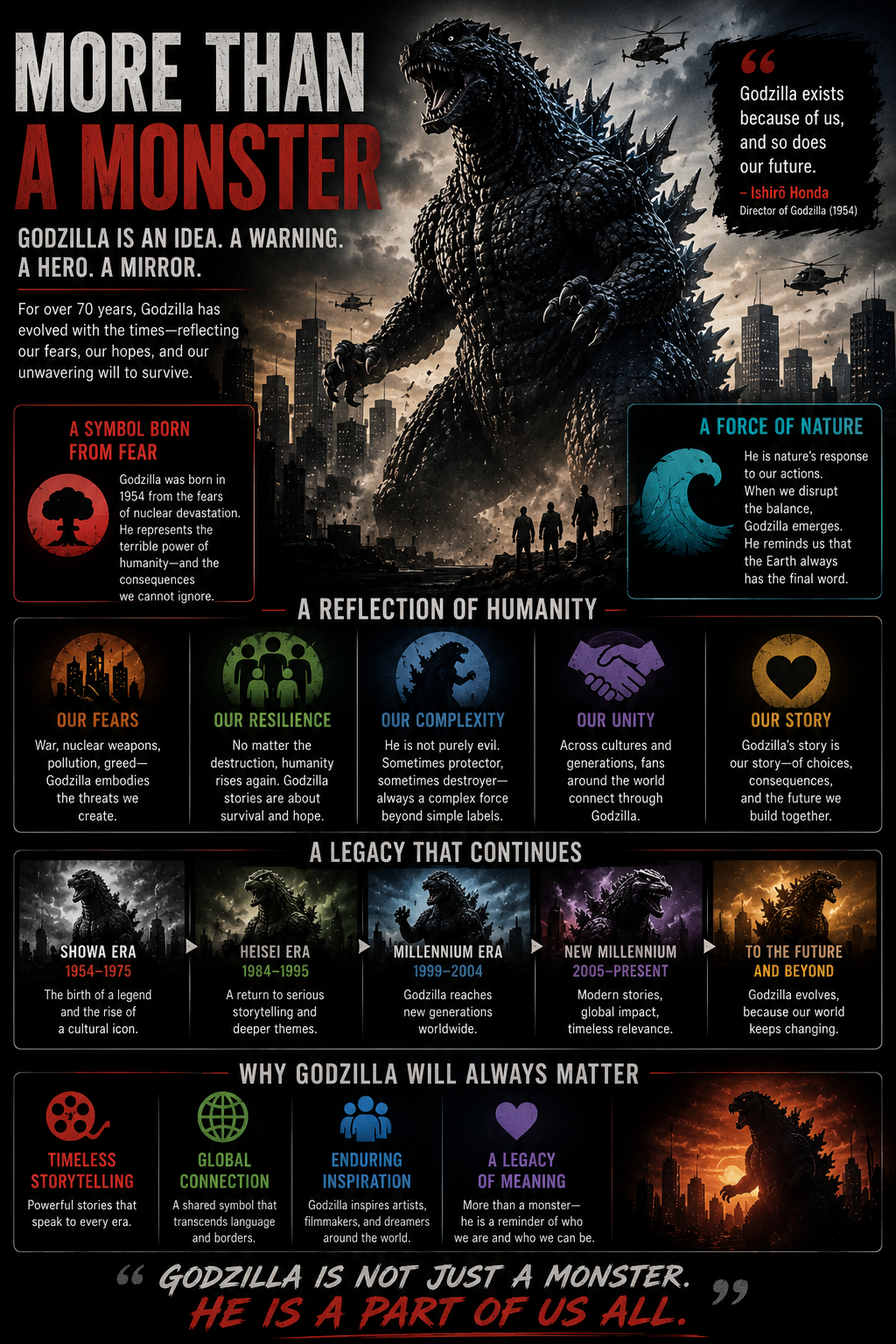
More than seventy years after his first appearance, Godzilla continues to inspire filmmakers, artists, collectors, and fans around the world. Few fictional characters have achieved the level of cultural influence and global recognition enjoyed by the King of the Monsters.
What began as a Japanese film in 1954 has grown into one of the most successful and enduring franchises in entertainment history. Through dozens of movies, television appearances, comic books, video games, collectibles, and merchandise, Godzilla has become far more than a movie character. He has become a symbol recognized across cultures, generations, and continents.
Part of Godzilla’s enduring appeal comes from his ability to represent different ideas to different people. To some, he is a cautionary reminder of humanity’s relationship with technology and the consequences of unchecked power. To others, he represents resilience, survival, and the unstoppable forces of nature. For many fans, he is simply a beloved character whose stories have provided decades of excitement, imagination, and unforgettable memories.
Godzilla’s influence can be seen throughout popular culture. His impact extends beyond Japan and Hollywood, inspiring countless filmmakers, artists, writers, toy designers, and collectors around the world. Few cinematic creations have maintained such relevance while continuing to attract new audiences’ decade after decade.
His roar is instantly recognizable.
His silhouette is unmistakable.
His story continues to evolve.
Most importantly, his legacy continues to grow with every new generation that discovers the King of the Monsters. Whether through classic black-and-white films, modern blockbuster adventures, collectibles, or personal memories shared among fans, Godzilla remains a powerful reminder that great stories never truly fade away.
More than a monster.
More than a movie character.
More than a cultural icon.
Godzilla is a legend.
Final Thoughts
Whether you discovered Godzilla through classic black-and-white films, Saturday afternoon monster movies, modern Hollywood blockbusters, toys, collectibles, or even a memorable trip to Japan, one thing is certain:
Godzilla is far more than a giant monster.
He is a cultural icon whose influence spans generations, continents, and decades.
For me, Godzilla represents more than a movie character. He represents creativity, imagination, history, and the incredible power of storytelling. From the black-and-white streets of post-war Tokyo in 1954 to modern theaters around the world, Godzilla has continued to evolve while remaining true to the themes that made him legendary. Few characters have managed to remain relevant for more than seventy years, yet the King of the Monsters continues to captivate audiences of all ages.
As a collector, learning about Godzilla’s history and experiencing the passion of fellow fans has given me an even greater appreciation for the franchise. Seeing my coworker’s incredible collection and later visiting the Godzilla Store in Shibuya, Tokyo, transformed Godzilla from something I enjoyed watching into something I genuinely appreciated as an important part of film history and popular culture.
Godzilla’s story reminds us that great characters are timeless. They adapt, inspire, and continue to find new audiences with each passing generation. Whether through movies, collectibles, artwork, books, or personal memories, Godzilla has created connections between fans around the world for more than seven decades.
Here at Collector’s Pit Stop, we celebrate the stories behind collectibles, and few stories are as fascinating, influential, and enduring as the history of the King of the Monsters.
Thank you for joining me on this journey through Godzilla’s remarkable legacy.
Long live Godzilla.