In This Guide
Beginner’s Guide to Custom Diecast Cars (Step-by-Step)
Custom diecast cars are one of the easiest and most affordable ways to go from collector to creator. Whether you collect Hot Wheels, Matchbox, or other diecast brands, customizing lets you transform inexpensive mainline cars into unique builds that reflect your own style and creativity. Hot Wheels are produced by Mattel, and you can explore official releases on the Mattel Creations website.
For many collectors, this is where the hobby becomes even more personal. The first time you repaint a casting, swap wheels, or add your own details, you stop simply buying cars—you start building something that feels uniquely yours.
If you are just beginning your collecting journey, you may also enjoy our guide:
How to Start Collecting Hot Wheels: 7 Easy Tips for Beginners
This guide picks up where that one leaves off. Now that you collect diecast cars, it is time to learn how to customize them.
What Are Custom Diecast Cars?
Custom diecast cars are factory-made diecast models that have been modified with new paint, wheels, decals, or body details.
Common diecast customizations include:
– Repainting the body in a new color or racing livery
– Adding decals, sponsor logos, or racing numbers
– Swapping factory wheels for premium rubber tires or detailed rims
– Lowering or lifting the stance
– Installing spoilers, splitters, diffusers, or wide-body parts
– Detailing headlights, taillights, grilles, and trim
Some collectors build realistic OEM-style customs, while others create wild race cars, drift builds, off-road trucks, or weathered barn finds.
The best part? No two customs are ever exactly the same.
Why Collectors Love Customizing Diecast Cars
Customizing diecast cars blends creativity, car culture, and hands-on building into one hobby.
Unlike many hobbies that require expensive equipment or a large workspace, diecast customizing is beginner-friendly and affordable.
Why collectors enjoy it:
– You can start with inexpensive mainline cars
– Most beginner tools are affordable
– You do not need a large workshop
– Simple customs can be finished in a weekend
– Every finished build feels personal and unique
There is also something incredibly satisfying about turning a common $1 car into a custom piece nobody else owns.
If you already enjoy the thrill of hunting for new releases and rare castings, customizing adds a second layer of excitement to the hobby.
Best Hot Wheels and Diecast Cars for Beginner Customs
For your first few customs, avoid rare or sentimental cars. Practice on inexpensive and easy-to-find castings first.
Great beginner choices include:
– Basic Hot Wheels mainlines
– Matchbox castings
– Simple muscle cars or sports cars
– Metal-body castings with fewer delicate parts
Simple body designs are easier to strip, sand, paint, and reassemble.
Think of it this way:
Keep your rare collectibles safely displayed, and use common castings as your creative canvas.
If you are still learning which cars may become valuable later, check out our guides:
– What Makes a Hot Wheels Car Valuable?
– How to Identify Rare Hot Wheels: Collector Tips for Finding Hidden Gems
Essential Tools and Supplies for Custom Diecast Cars
You do not need a professional workshop to start customizing diecast cars.
A simple beginner setup can take you surprisingly far.
Basic Tools
– Small hand drill or rotary tool
– Drill bits for factory rivets
– Hobby knife
– Tweezers
– Small screwdrivers
– Small containers for parts
– Tap and screws (commonly 2-56 or M2)
Paint and Finishing Supplies
– Metal-safe paint stripper
– Spray primer
– Acrylic or enamel paints
– Clear coat (gloss, satin, or matte)
– Fine grit sandpaper
Safety Gear
– Safety glasses
– Gloves
– Mask or respirator for spraying paint or chemicals
Over time, many collectors upgrade to airbrushes, polishing compounds, and advanced detailing tools—but you do not need everything on day one.
How Much Does It Cost to Start Customizing Diecast Cars?
One reason diecast customizing is so popular is because the startup cost is relatively low.
A beginner setup can often be built for under $50–$100 depending on the tools you already own.
Budget breakdown example:
– Mainline diecast cars: inexpensive
– Basic spray paint and primer
– Hobby knife and sandpaper
– Small drill or rotary tool
– Simple safety gear
The key is to start small and upgrade gradually as your skills improve.
Avoid the mistake of buying every tool immediately. Focus on learning the basics first.
Step 1: Disassemble the Diecast Car
Before painting or modifying anything, the car needs to come apart.
1. Flip the car over and locate the factory rivet posts.
2. Carefully drill off only the mushroomed rivet heads.
3. Gently separate the base from the body using a small flat tool.
You should now have separate pieces:
– Body
– Base
– Interior
– Windows
– Additional parts like spoilers or roll cages
Use small trays or containers to keep everything organized. Tiny parts disappear fast on a crowded desk.
Step 2: Strip and Prep the Body
Preparation is one of the biggest differences between an average custom and a professional-looking build.
To prep the casting:
– Apply metal-safe paint stripper
– Let the factory paint soften
– Scrub the paint off carefully
– Rinse and dry completely
– Sand rough spots or casting lines
– Wash the body again before primer
Good prep work creates smoother paint and cleaner final results.
If the surface looks rough before painting, it will usually look rough afterward too.
Step 3: Prime the Casting
Primer helps paint bond properly and reveals imperfections before color goes on.
Tips for priming:
– Shake the can thoroughly
– Spray several light coats
– Avoid heavy spraying
– Mount the body on a clip or holder for easier rotation
– Allow full drying time between coats
Once dry, lightly sand the primer if necessary for a smoother finish.
A clean primer coat creates the foundation for everything that follows.
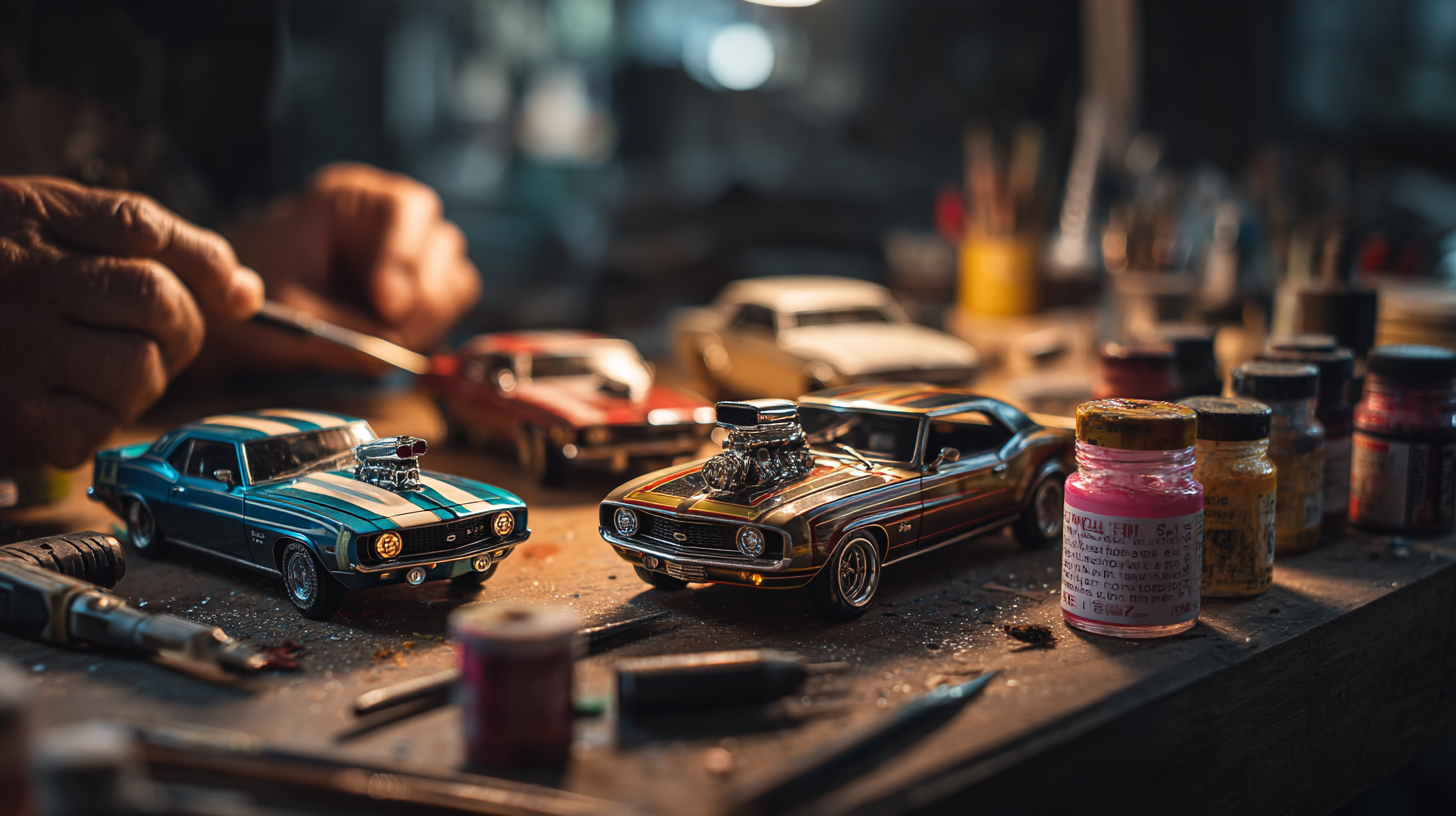
Step 4: How to Paint Custom Diecast Cars
There are several ways beginners paint custom diecast cars.
Spray Cans
– Affordable and beginner-friendly
– Great for solid colors
– Easy to find locally
Brush Painting
– Best for details and interiors
– Useful for headlights, taillights, trim, and accents
Airbrushing
– Produces smoother finishes
– Excellent for fades and advanced effects
– Requires more practice and equipment
No matter which method you choose, patience matters.
Heavy paint coats, fingerprints, and rushing drying times are some of the fastest ways to ruin a good custom.
If you’re new to painting, reviewing basic model painting techniques can help improve your results.
Step 5: Add Details and Decals
Details are where your personality really starts showing.
Popular Painted Details
– Headlights
– Taillights
– Grilles
– Window trim
– Exhaust tips
– Diffusers
– Door handles
Decals and Graphics
– Racing stripes
– Sponsor logos
– Racing numbers
– Custom liveries
Start simple.
Even basic headlights, taillights, and a clean stripe package can dramatically improve the look of a casting.
As your confidence grows, you can move into full racing liveries and advanced detail work.
Step 6: Wheel Swaps and Stance
Wheel swaps are one of the easiest ways to completely change the look of a diecast car.
Many collectors say wheel swaps alone make a mainline feel premium.
Wheel Swap Basics
– Remove the original axles
– Install donor wheels or aftermarket sets
– Test-fit carefully
– Ensure the wheels spin freely
Adjusting Stance
To lower the car:
– Trim or file axle channels
To raise the car:
– Add spacers or modify the base
Even a simple repaint combined with upgraded wheels can completely transform a casting.
Step 7: Clear Coat and Final Finish
Clear coat protects your paint and determines the final appearance of the build.
Before applying clear coat:
– Make sure decals are fully dry
– Confirm paint has cured properly
– Use compatible paint products
Apply several light coats rather than one heavy coat.
Different Clear Coat Styles
– Gloss = shiny show-car finish
– Satin = balanced realistic finish
– Matte = race car or weathered appearance
Allow the clear coat to fully cure before handling or polishing the car.
Step 8: Reassemble Your Custom Diecast Car
Once everything is dry, it is time to put the build back together.
– Test-fit the interior and windows
– Clear paint buildup where needed
– Tap threads into drilled posts
– Install screws to secure the base
Using screws instead of re-riveting allows future upgrades, repairs, or wheel swaps later on.
Common Beginner Mistakes to Avoid
Every customizer makes mistakes early on.
Here are some of the most common beginner problems:
– Using heavy paint coats
– Skipping primer
– Rushing drying times
– Practicing on rare cars
– Losing tiny parts
– Forgetting safety gear
– Handling paint before it cures
Do not let mistakes discourage you.
Every experienced customizer started somewhere.
Simple Beginner Custom Ideas
If you are not sure where to start, try one of these easy project ideas:
Simple Recolor
A clean repaint with detailed lights and clear coat.
OEM-Style Build
Factory-style colors with realistic wheels.
Race Car Build
Bold graphics, sponsor decals, and lowered stance.
Barn Find or Weathered Build
Rust effects, faded paint, and worn details.
Keep your first few projects simple and focused.
Trying to do too much at once can quickly become frustrating.
Where Customizing Fits Into Your Collector Journey
Customizing is not about destroying valuable collectibles.
It is about deepening your connection to the hobby.
Many collectors:
– Keep valuable pieces sealed and protected
– Customize inexpensive mainlines
– Use customs as creative expression
Over time, custom diecast cars become personal projects tied to memories, ideas, and creativity.
If you already enjoy the nostalgia and excitement of collecting, customizing gives you a way to leave your own mark on the hobby.
You are no longer just collecting miniature cars—you are building miniature stories.
Frequently Asked Questions About Custom Diecast Cars
What paint works best for Hot Wheels customs?
Most beginners use spray paint, acrylics, or enamel hobby paints. Many advanced builders eventually move to airbrush systems.
Can you customize plastic-body diecast cars?
Yes, but metal-body castings are generally easier for beginners.
Are wheel swaps difficult?
Not usually. Wheel swaps are considered one of the easiest beginner modifications.
Do custom diecast cars increase value?
Sometimes—but most customs are built for creativity and enjoyment rather than resale value.
What is the easiest first custom?
A simple wheel swap and repaint is usually the best beginner project.
Final Thoughts
Every experienced customizer started with one cheap mainline car, a few basic tools, and curiosity.
Your first custom will probably not be perfect—and that is completely normal.
The more you practice, the more your skills improve. Eventually, you start creating builds that truly reflect your personality, favorite cars, and imagination.
That is what makes custom diecast cars so addictive:
they turn collecting into creating.
And sometimes, the most meaningful car in your collection is not the rarest one—it is the one you built yourself.
If you’re ready to start your first custom diecast project, explore our latest diecast cars, wheels, and collector finds at Collector’s PitStop—new inventory is added regularly for builders and collectors.